
From Sackcloth to Sidewalks: A History of Ash Wednesday and Ashes to Go
Today, it isn’t uncommon to see ashes being distributed on sidewalks, at train stations, or at bus stops. We know it as Ashes to Go, and although no one knows exactly who started this trend, the Episcopal public imposition of ashes originated in an urban ministry in the late 2000s. Clergy asked how to offer Ash Wednesday to people whose workdays and commutes made traditional services inaccessible. Around 2007–2008, priests in the Episcopal Diocese of Chicago began offering ashes in public spaces as an extension of longstanding street-level outreach.
Interestingly, as far back as the third and fourth centuries, Ash Wednesday was a public expression of repentance at the start of Lent. In the beginning of Christianity, repentance was not quiet or private. It was unmistakably visible.
The Church had formal systems of public penance for serious sins such as adultery. Those seeking reconciliation were set apart from the community, dressed in mourning garments–sackcloth–and covered with ashes as they began the long process of repentance that could last throughout Lent. These penitents stood at the doors of churches, asking for the prayers of those entering for worship.
Historians summarize Ambrose of Milan’s description of sinners as dressing in sackcloth and ashes, begging the prayers of the faithful. Repentance was not just spiritual–it was physical and social. Historians such as Eusebius of Caesarea document how penitents publicly mourned before the Church, revealing a Christianity that understood conversion as something enacted with the whole body.
At this time, ashes were not for everyone. They marked a specific group—those who had visibly fallen and were now visibly returning. But, over time, something shifted.
By the sixth century, Lent was increasingly standardized across Western Christianity, and the entry into this season became more clearly defined. What had once been a rite reserved for public penitents took on a broader meaning. The Church began to recognize that repentance was a calling for us all.
By the tenth and eleventh centuries, Ash Wednesday was a liturgical practice. The ashes once imposed only on penitents were now offered to the entire congregation. This marked a decisive turning point: repentance became corporate rather than selective.
In the medieval period (1100 AD), another layer of symbolism was added. The ashes were made from the previous year’s Palm Sunday branches, creating a powerful theological loop. The palms that once celebrated Christ’s triumphal entry into Jerusalem were burned and returned as ash—glory burned to dust; celebration reshaped into humility.
Ash Wednesday teaches with symbols what words alone cannot–human achievement fades, life is fragile, and that returning to God is always necessary.
By the twelfth century, Ash Wednesday had evolved into what we recognize today—not a day of exclusion, but of inclusion–a mark of shared humanity. The ashes no longer separate sinner from saint. Instead, they level us all.
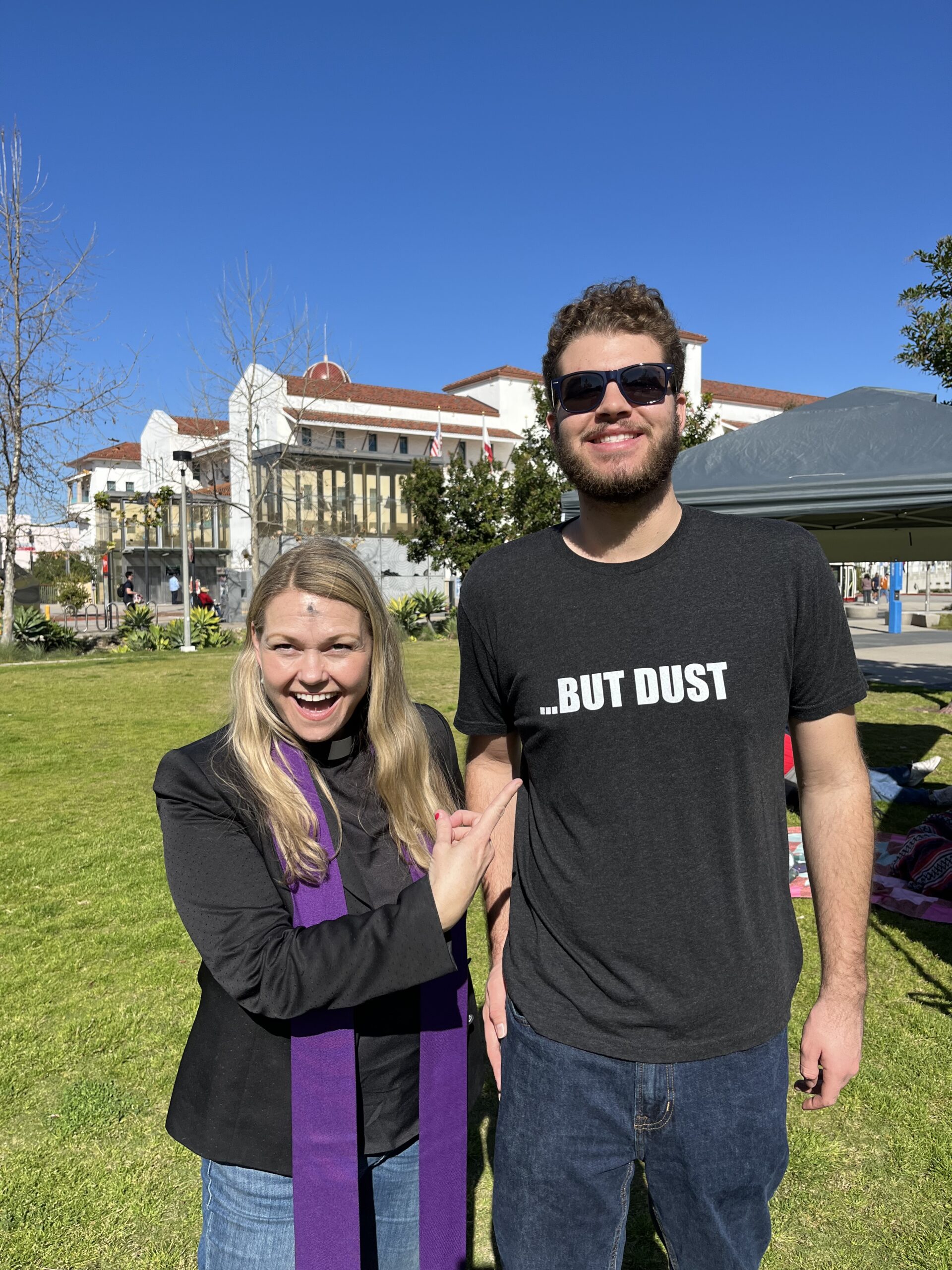
Today, the imposition of ashes is celebrated in services across the Church. It also shows up in very ordinary places—on college quads, along busy walkways, and in the middle of packed schedules.
In EDSD, Ash Wednesday is offered in churches and in public life. Churches hold Ash Wednesday services across the diocese, throughout the day, and Ashes to Go meets people right where they are. At San Diego State University and at University of California San Diego, Agape San Diego campus ministries imposes ashes throughout the afternoon. Students stop for a brief pause in the middle of classes to remember that “you are dust, and to dust you shall return.” For students navigating questions about who they are and where they’re headed, this simple moment becomes a tangible reminder: “You are of God, and you are loved.”
Luca Delaney, a sophomore at SDSU and regular attendee at Agape gatherings, said, 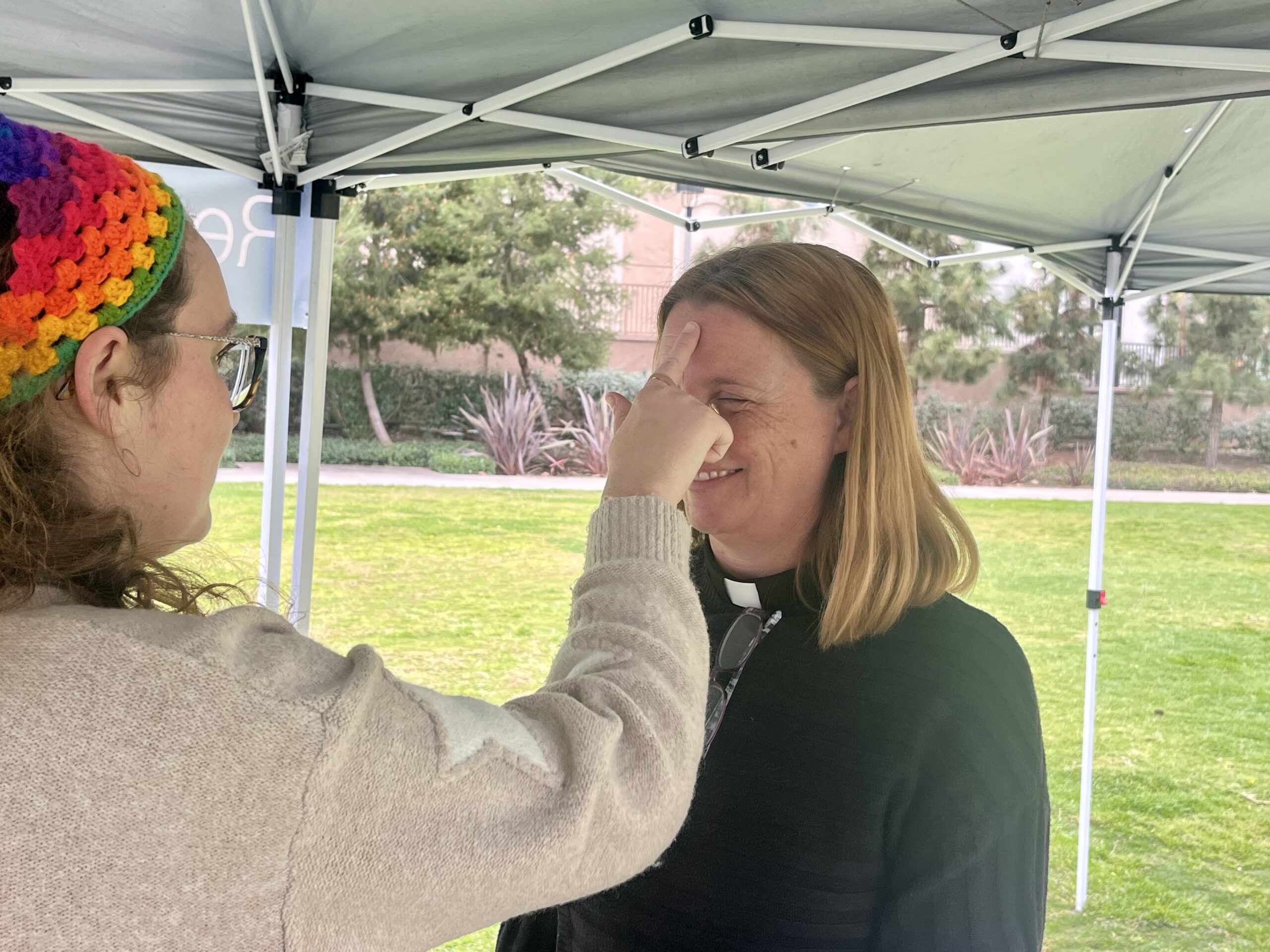
“Getting to administer ashes to Rev. Deacon Jen last year felt super special. It felt so right–to be a part of this tradition that people have been doing for hundreds of years. Receiving ashes has always been something very special to me, but getting to take part in a tradition that people have been doing for hundreds of years, I feel closer to Christians who came before me, and I love that feeling. Getting to be on the other side of that was even better. It felt so right, it felt like another sign to follow the path that God has been setting before me.”
Whether you find yourself in a church or on a street corner this Ash Wednesday, know that you are beloved and greater than your human wrappings. We are but dust, and to dust we shall return, and that is profoundly beautiful and comforting.

by
Category: #Campus Ministry, #Communications, #Worship & Formation
Respond to this:
2 replies to “From Sackcloth to Sidewalks: A History of Ash Wednesday and Ashes to Go”
Recent Stories
“Will we look away from suffering?” was the question that over 150 people gathered at Good Samaritan Episcopal Church asked on March 30, Holy Monday. As Holy Week began, we […]
Holy Week is holy not because it is religious but because it is profoundly Real. My first Holy Week as a new rector challenged me to line up all the […]
Over the years, I’ve had countless times where I’m sitting at my desk, after a long day, looking at a half-finished project and realizing I wasn’t stuck because I didn’t […]



Wow! Wonderful article, Chris!
Thank you for deepening our history of this day and this practice, revealing our arc from individual exclusion to communal inclusion. Now we are freed and sent to offer grace and invitation for a season of renewal for all people, right where they are in the midst of their day. This year’s practice also coincides with the lunar new year and Ramadan, so we have a multicultural and multifaith opportunity to join together in repenting from what does not sustain life and renewal of our connectedness, whether by fasting or prayer or reflection and setting intentions to prioritize what is life giving for us and for our neighbors.
Peace and every good to you all in this springtime of the Spirit that we call Lent, which just means “spring.”
+Pastor Darin Johnson of Agape San Diego
For 10 plus years Ive been part of a team that dispenses Ashes on Ash Wednesday as part of St Pau;\ls Cathedral.
This year I was out in front of the Cathedral This ministry is a real blessing for those on the teams as well as the many folks who are eager to have this Holy service performed on them and most especially the personal prayer time for them and for those they wish prayers for.
This year we were able to place ashes on a Bus driver on the route who stopped and asked us to come on board
and Bless Him with the ashes and prayers.
Thank you for the backround on this important outreach ministry in the name of our Risen Lord Jesus Christ.
Bunch,Kathryn