The Gospel of Showing Up: A Reflection After the Shooting at the Islamic Center of San Diego
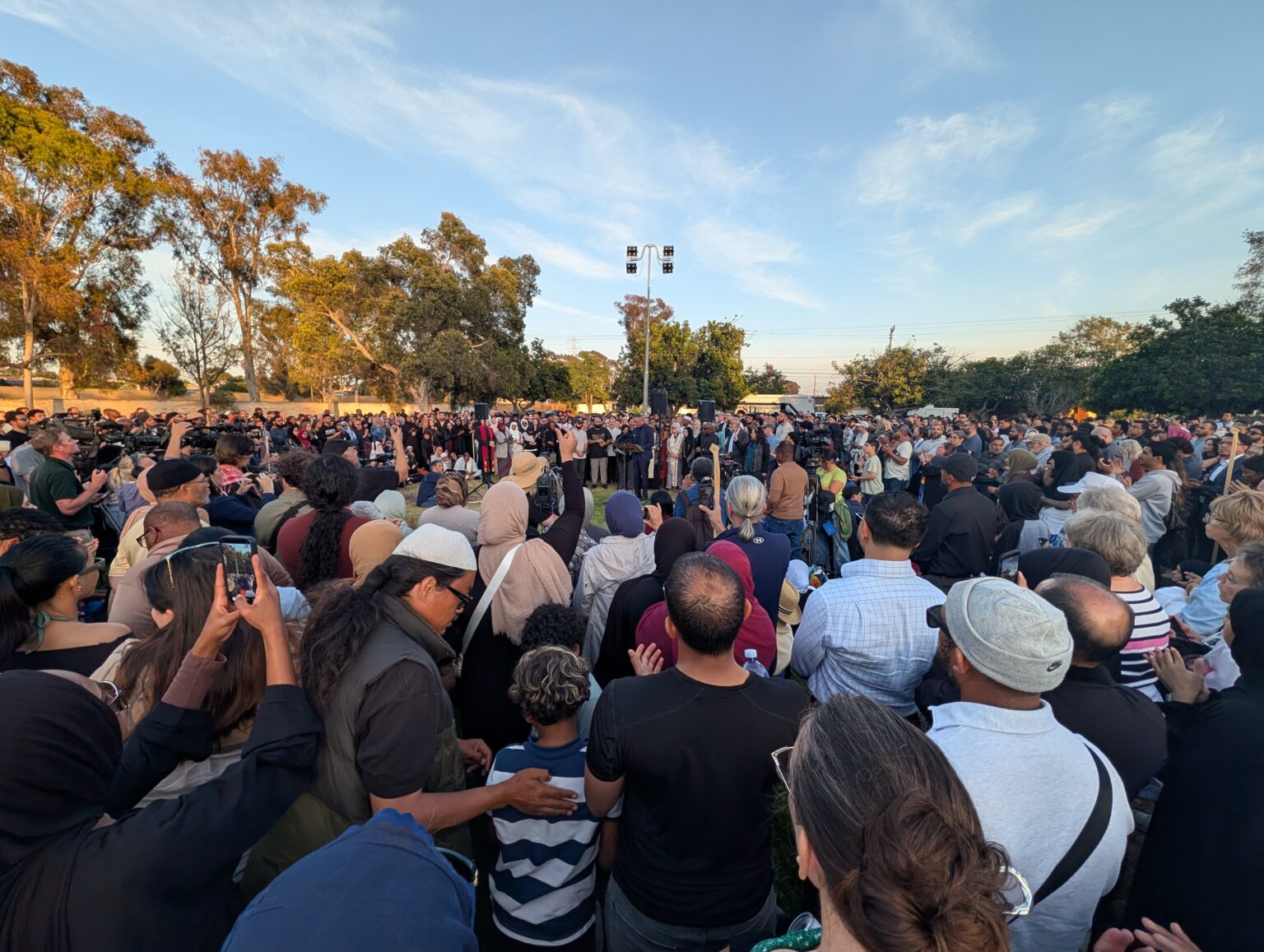
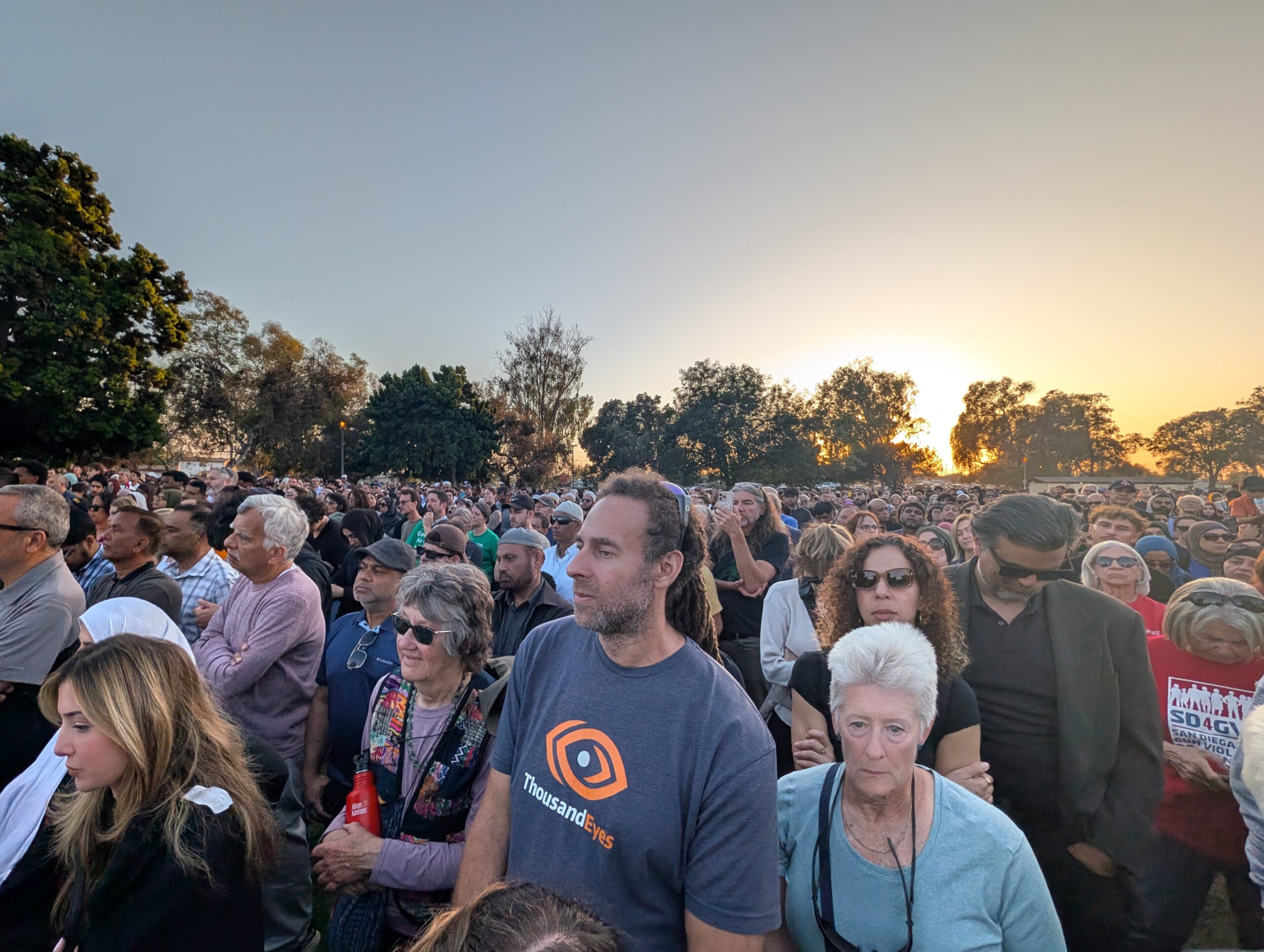
When something truly horrific happens, we often ask ourselves, ”But what can I do?” The desire to help is there, but the capacity for practical assistance is lost. We search for the right words, the right response, or an action that feels large enough to match the weight of grief unfolding right in front of us. But standing in Lindbergh Park on Tuesday evening with thousands of neighbors gathered to mourn the shooting at the Islamic Center of San Diego, Bishop Susan Brown Snook reminded me that the first and most important thing we can do is simply show up.
The park was full of people long before the vigil began. Clergy in collars and stoles stood beside imams, rabbis, pastors, and community leaders. Families gathered with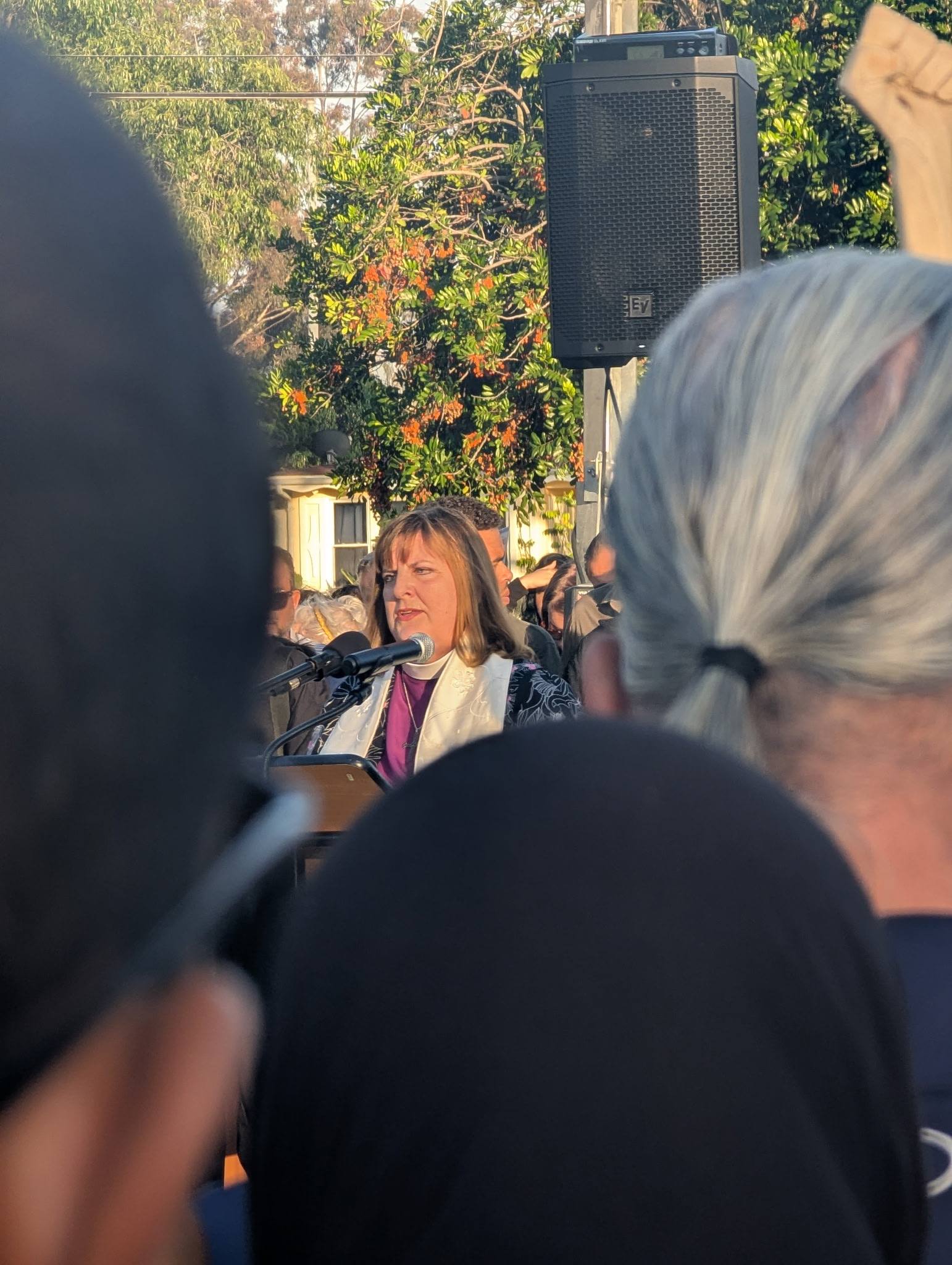 their young children. And the eerie sound of thousands of people in silence–only the sniffles of grief carried. Many had the distinct look of tears being held back by the thinnest of layers.
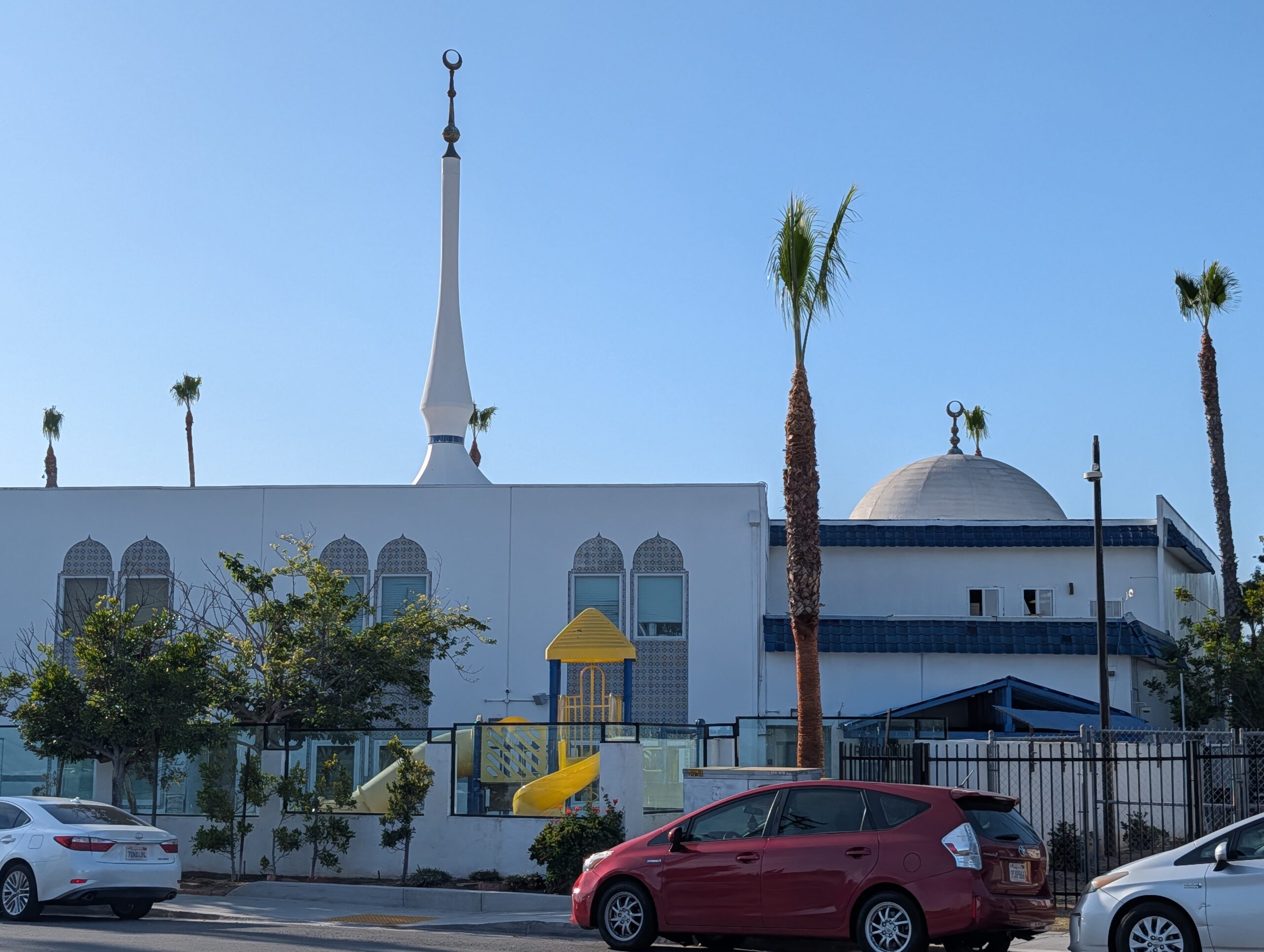
Just 30 hours earlier, the Islamic Center of San Diego, a stone’s throw from where I stood, was the site of devastating violence. Two heavily armed teenagers (children!) opened fire during a busy day at the mosque and school campus. In the chaos, staff and neighbors rushed to protect children and families, which likely saved dozens of lives.
As the news spread, the grief across San Diego became deeply personal to our city. The three victims were identified as Amin Abdullah, a security guard and father of eight; Mansour Kaziha, a 78-year-old mosque elder; and Nader Awad, a longtime neighbor and community member. During the vigil, speaker after speaker described them not simply as victims, but as heroes.
 Abdullah confronted the shooters and warned others inside the campus– protecting more than 100 children attending programs at the Islamic school. Mansour Kaziha, known affectionately as “Abu Ezz,” was a longtime caretaker and leader at the mosque who had managed the mosque store for nearly 40 years. He was remembered for his warm smile and his deep devotion to the community and children of the Islamic School. Kaziha was the first person to call 911 after gunfire erupted outside the mosque.
Nader Awad lived directly across the street from the Islamic Center. When he heard the gunfire, he did not hide from the danger; he ran toward it. Awad was shot and killed after leaving the safety of his home to help those in need. Both Kaziha and Awad stayed outside the building and helped draw the shooters away from the entrances where children were escaping.
The weight of their sacrifice filled the park. In moments like these, our presence matters.
That was at the heart of Bishop Susan’s remarks during the vigil. Addressing the Muslim and interfaith community gathered there, she acknowledged something many in San Diego already know to be true: the Islamic Center has consistently shown up for others. They have stood beside neighbors in moments of pain, injustice, fear, and uncertainty. They show up for justice and immigration rallies. They feed their neighbors. And now, in their own moment of grief, the wider community was there to stand beside them.
She said, in part, “…for those who are suffering and for those who are mistreated by our society, we are here today to show up for you.”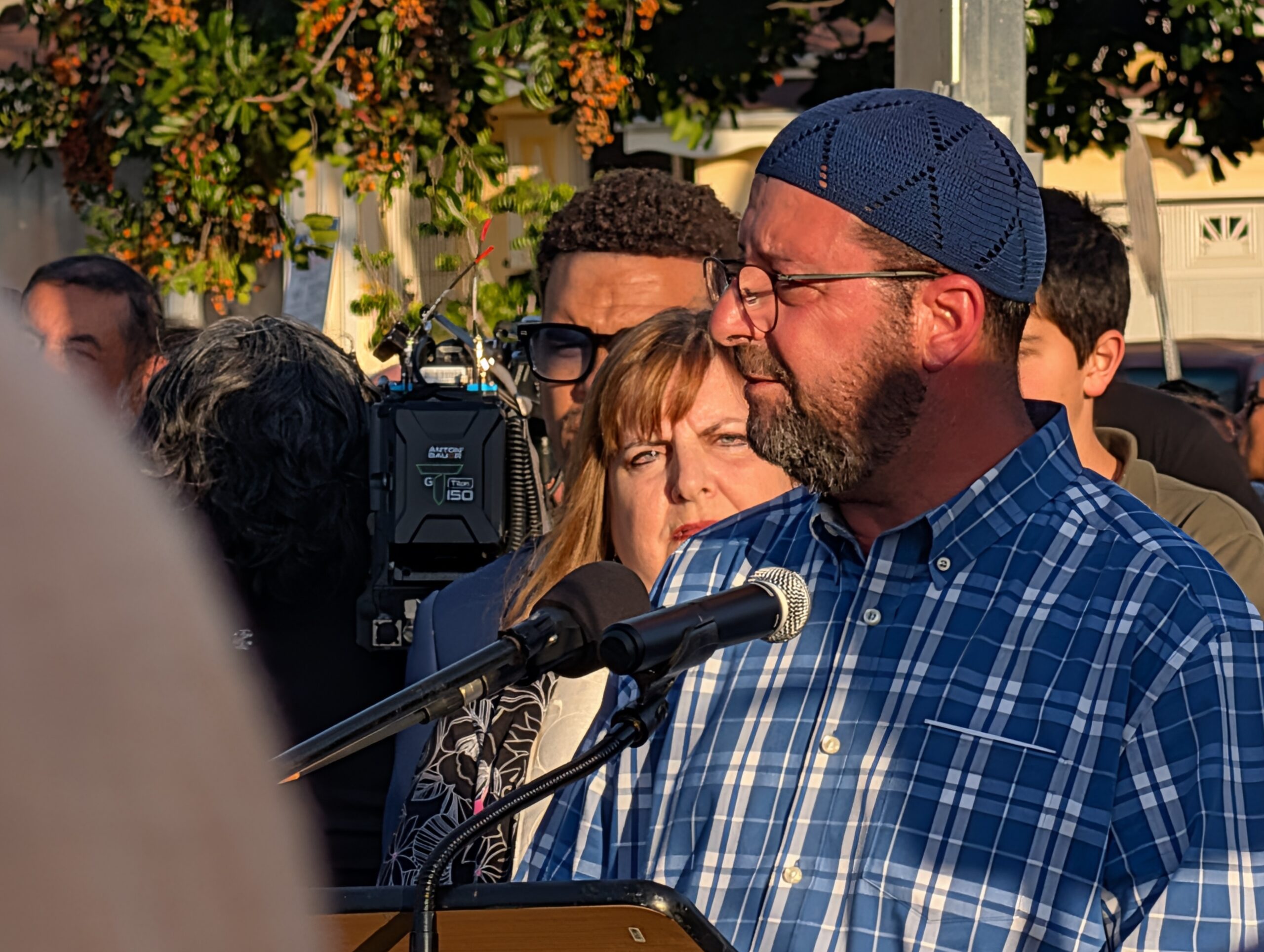
The phrase stayed with me all night: “show up for you.”
In a world motivated by outrage cycles and the demonizing of Muslims, “showing up” can sound small. But standing there among thousands of people from different faiths and backgrounds, it felt anything but passive. It felt deeply real. It felt like the world broke open, and Jesus’ ministry leaked through.
Because showing up means refusing to let people suffer alone.
It means physically placing ourselves beside neighbors who feel afraid, isolated, or targeted. It means saying, with our presence, “Your safety matters to us. Your dignity matters to us. Your grief matters to us. We will not leave you to carry this alone.”
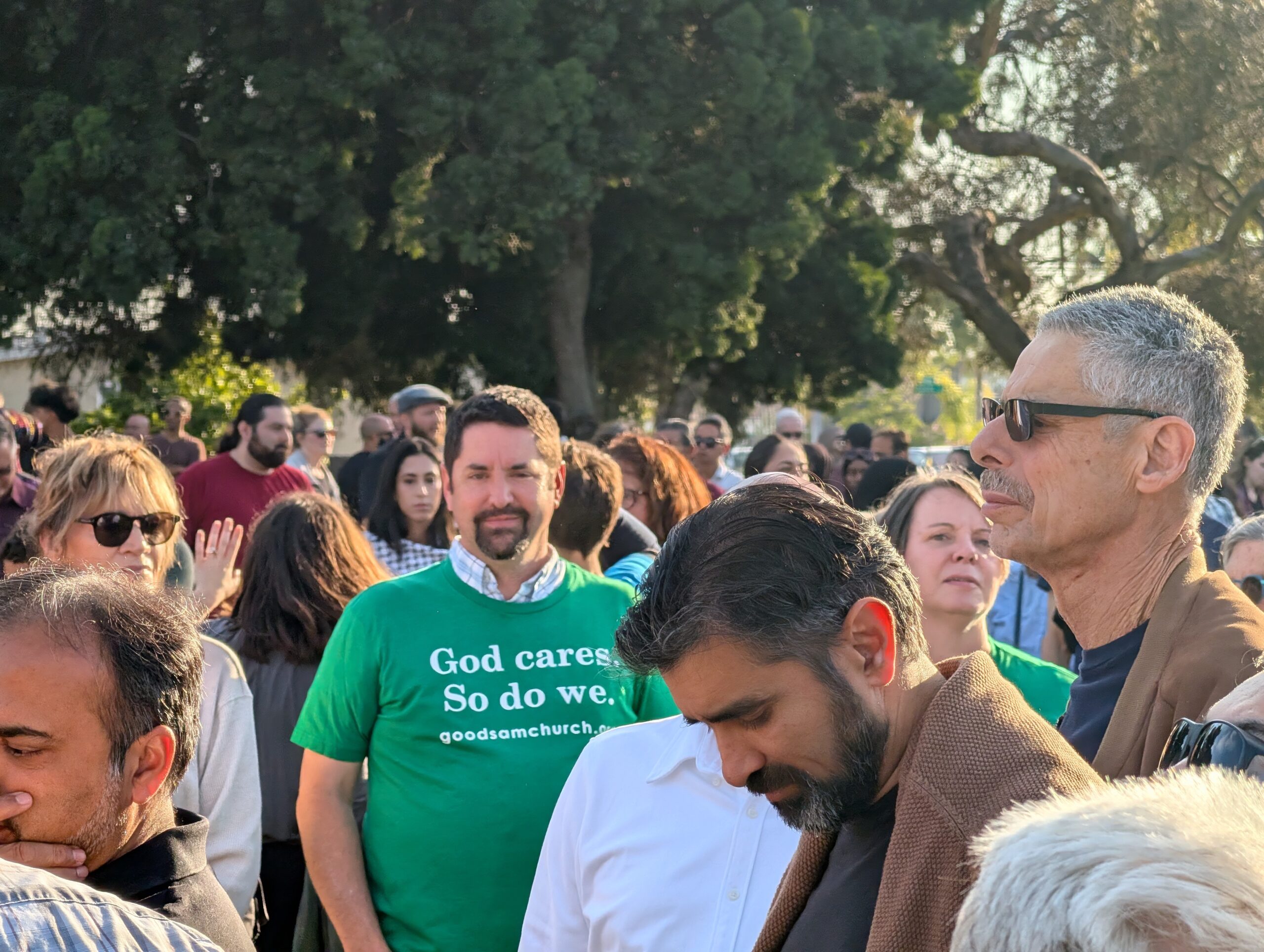 At the vigil, the victims were described as martyrs. They pursued the holiest calling: to put another person before themselves. And it cost their lives. They embodied something profound: every person is made in the image of God and deserves protection from violence.
I can’t ignore how familiar this story is. Again and again, Jesus shows up for suffering people. He shows up for outsiders. He shows up among the sick and excluded. He shows up in places marked by fear, grief, and division.
And there it is again–something transformative about showing up.
I thought about that while listening to speakers throughout the evening. There was sorrow, yes, there was outrage, yes, but there was tenderness. Community members embraced one another. Strangers checked in on strangers. People smiled at young children pushing through the crowd for a better view. A soft togetherness had taken over the park.
As the vigil began, Bishop Susan reflected on Jesus’ words: “Blessed are the peacemakers. Blessed are those who mourn. Blessed are those who hunger and thirst for righteousness.” Peacemaking is not abstract. Mourning is not abstract. Righteousness is not abstract. They require us to move toward people. And moving toward one another may be one of the most important acts available to us right now. It says we belong to one another whether we like it or not.
As I looked around the park, I realized that nobody at the vigil believed it would solve the problems in our society. The gathering could not undo the violence. One evening could not heal the wounds. But that does not make showing up meaningless. In fact, it may make it even more important, because we are shaped by the countless moments when people decide to show up for each other.
Standing there, surrounded by prayers and grief, I was reminded that in painful moments, there is a way forward, and it starts with showing up.