Repairers of the Breach: From Lament to Witness

“Will we look away from suffering?” was the question that over 150 people gathered at Good Samaritan Episcopal Church asked on March 30, Holy Monday. As Holy Week began, we paused to lament and pray, holding the world’s grief rather than turning away from it.
Inside the church, the room filled with clergy in purple stoles, lay leaders, families, neighbors, and partners from across traditions. Episcopalians,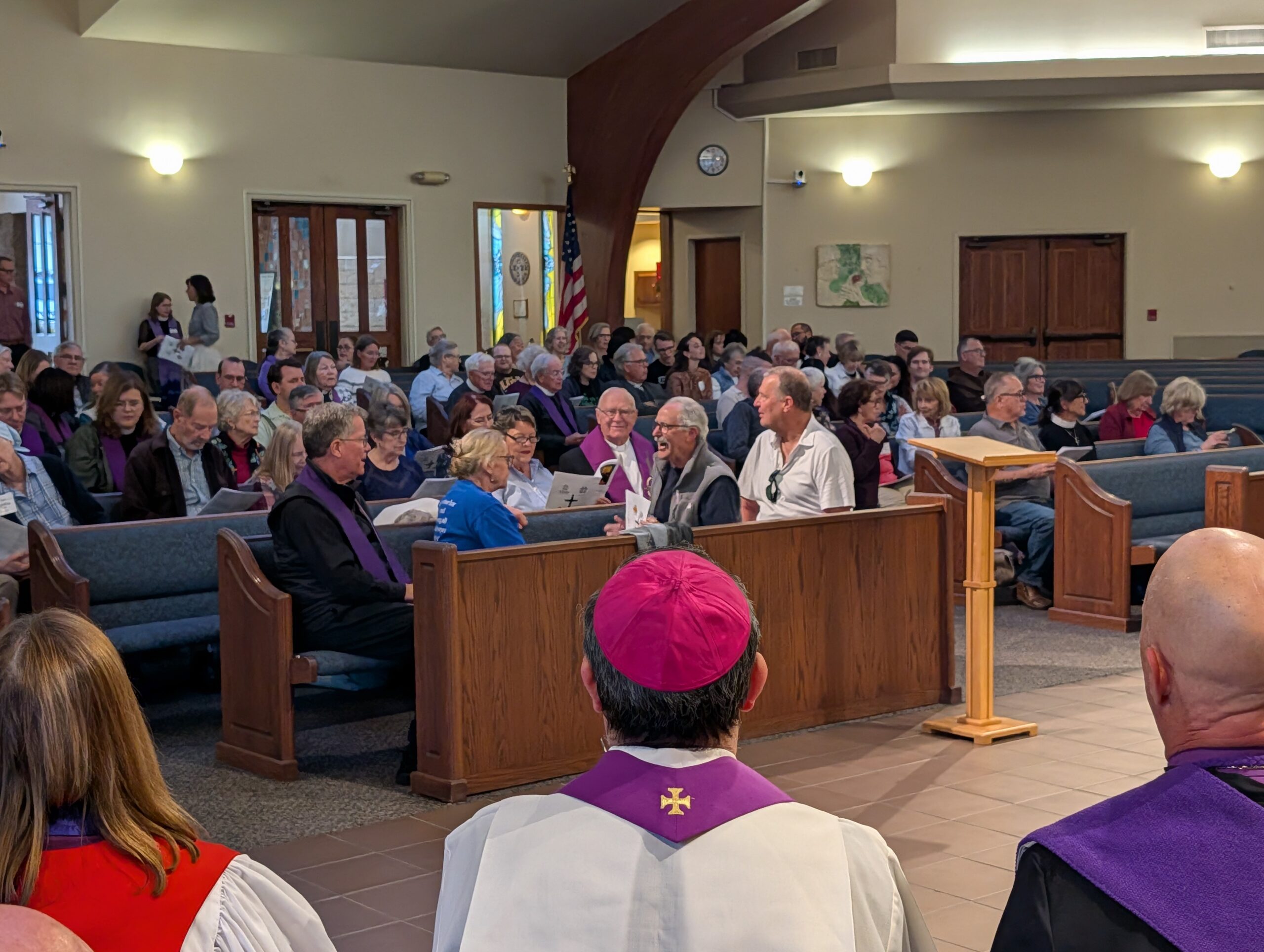 Lutherans, and Roman Catholics came together for prayer shaped by lament, scripture that refuses to soften the truth, and a shared willingness to stand in the tension between grief and hope.
In that space of shared grief, Bishop Susan Brown Snook said, “During Holy Week, we remember that Jesus came to break down barriers–barriers between God and human beings, and barriers that separate people from one another.”
Her words reframed everything that followed. Repairers of the Breach was not just a gathering about immigration or public policy; it was about barriers that continue to divide human beings from one another. “In mid-2025, it was estimated that there were 178 million displaced people in the world. And there are millions more now that there is another war. Each one of those people has a history, a family, a heart.
“Each one of those people is a beloved child of God. Each person stuck in a detention center, unable to contact their family, each person hiding in fear of war, violence, or deportation. Each person worried about their next meal or where their children’s health care will come from… They are all beloved and precious in God’s sight. And God tells us not to look away,” said Bishop Susan Brown Snook.
Do not look away. Do not retreat into abstraction or safety. Faith, as she described it, refuses distance. It draws closer. It sees. It responds. Lament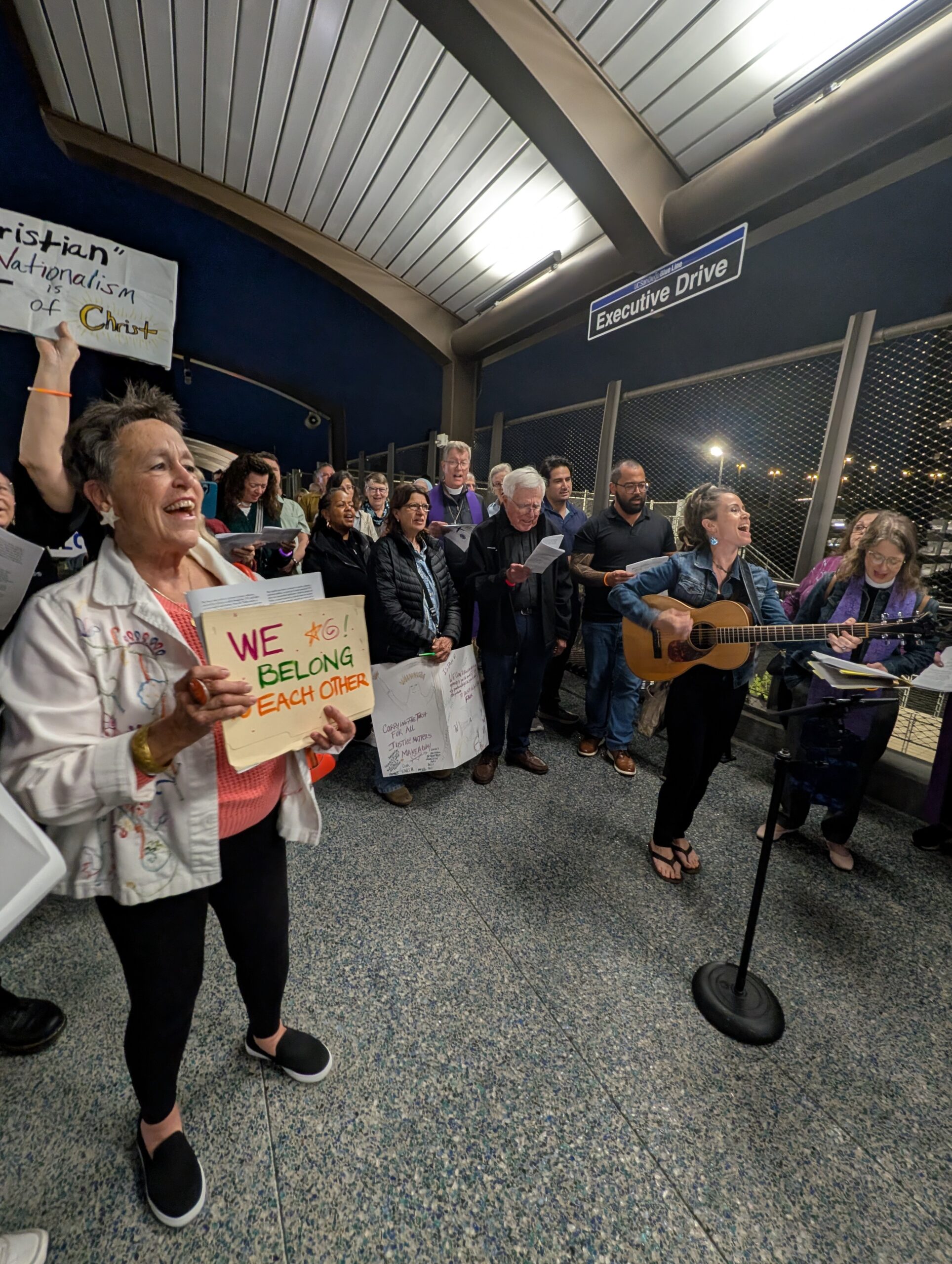 is not passive; it is the beginning of courageous love in action.
Ashley, a young woman from the San Diego Organizing Project, shared what it meant to grow up as the child of an undocumented parent–the constant awareness that stability could shift without warning. She recalled standing outside a courthouse, watching two young children leave after their father was detained and deported–and realizing how easily that could have been her own story.
Through tears, she told of her older sister, a DACA recipient, who could not fly to attend their younger sister’s college graduation because of increased ICE presence at airports.
The room held that truth without trying to resolve it. That is what lament does. It tells the truth–and then asks what comes next.
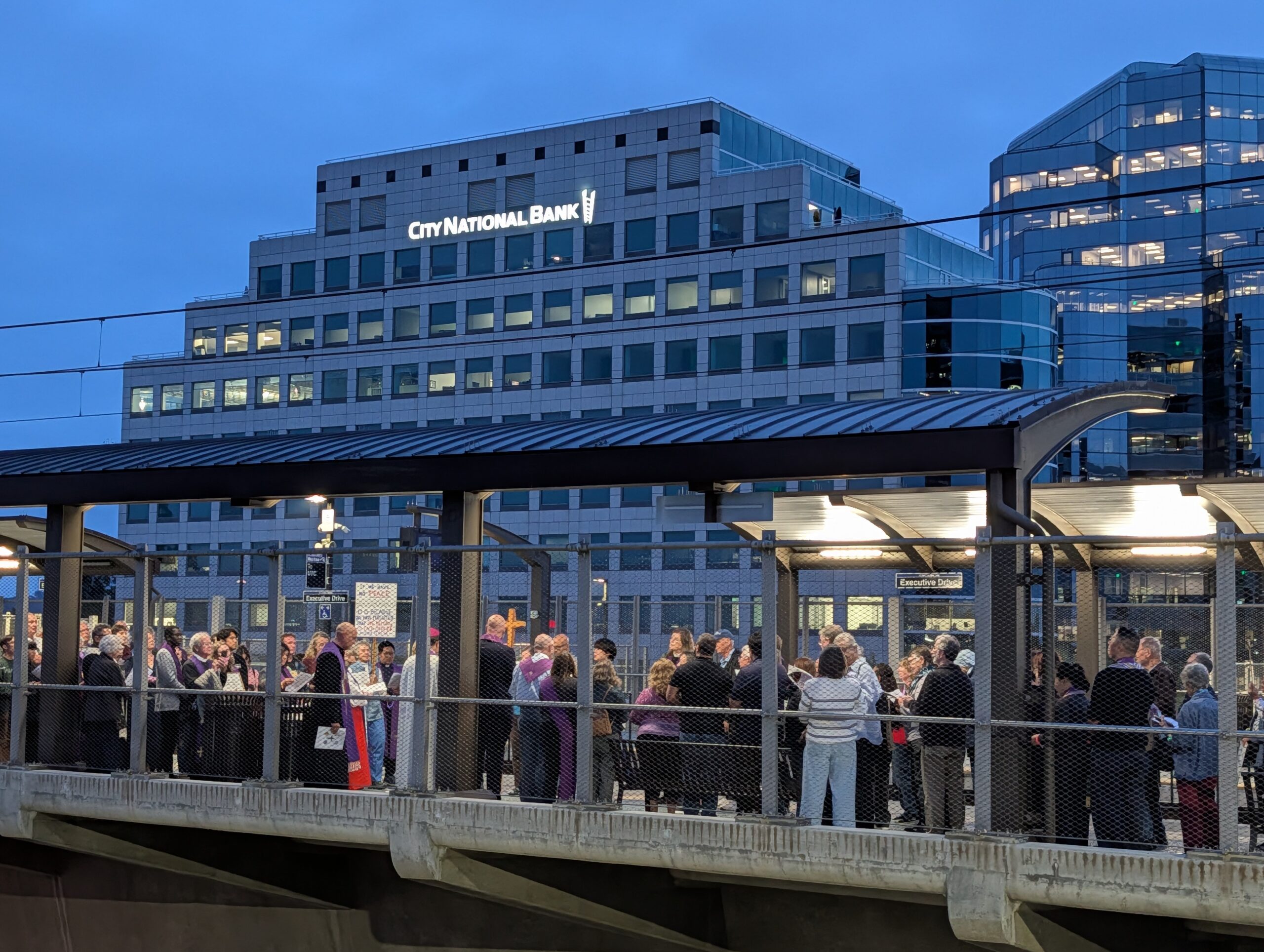 And then, we moved into the public sphere. Out of the sanctuary. Into the streets.
Our community walked together toward the Executive Drive Trolley Station–a trolley line that reaches all the way to the US/ Mexico border. The procession was quiet and deliberate. Not loud, not performative.
At the station that transports thousands of people each day, the closing reflections were offered.
Bishop Felipe Pulido, Assisting Bishop from the Roman Catholic Church, spoke first, “These are not distant stories. They are lived realities here in San Diego. We therefore call upon our leaders to recognize and uphold the fundamental dignity of every human person, without exception. We are called to welcome, to protect, to promote, and to integrate the immigrant. These are not abstract ideals. They are the living expression of compassion in our time.”
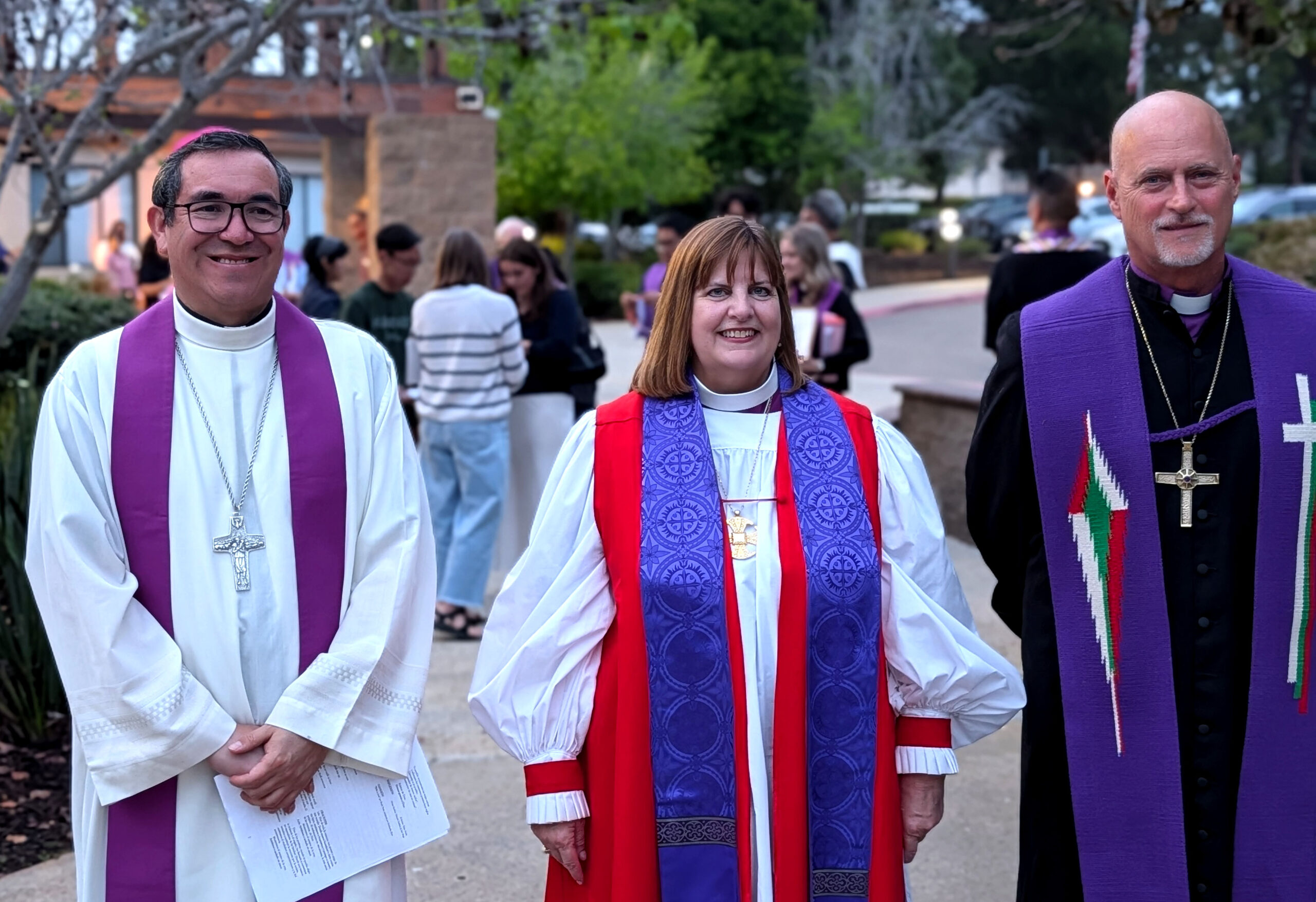 Then Bishop David C. Nagler, ELCA, stepped forward, motioning around him–calling attention to the literal place of transit, reminding us of warnings found in transit systems, “Mind the gap! You can’t repair what you don’t see.”
He named the gaps that shape our lives: the distance between wealth and poverty, between those who hold power and those pushed to the margins, between communities taught to fear one another. Bishop Nagler said, “There’s a gap that exists between people who are born in a body like mine… and those who get pushed to the edges. There is no way that we can repair the breach that’s in the world if we have a giant breach in our hearts.”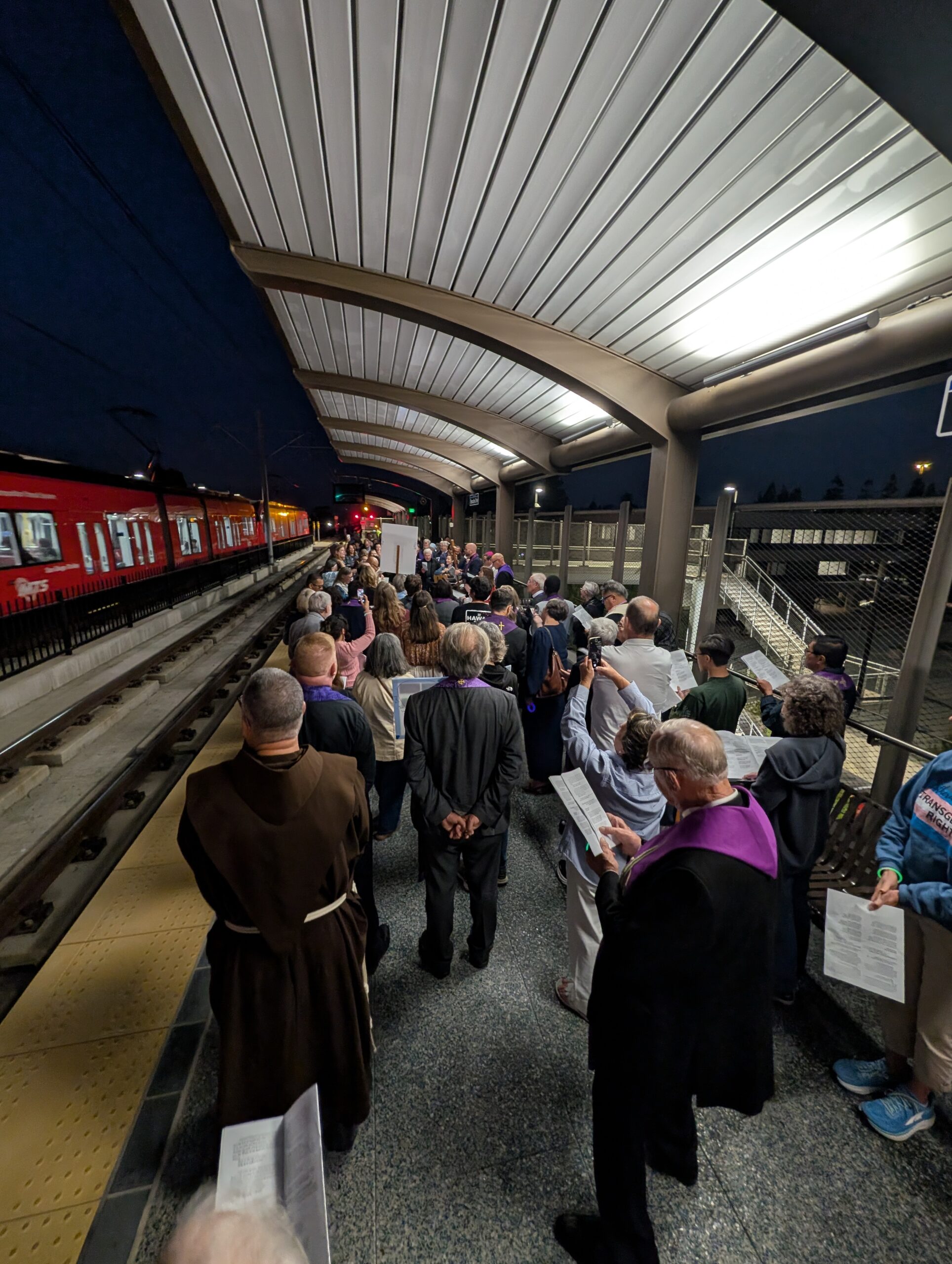
The work of repair is external but also personal. It is spiritual. It requires attention—not just to systems, but to ourselves. Standing there, with over 150 people, at a place built around the freedom of movement, the symbolism was unmistakable. The Church had moved from prayer to presence–naming what is broken and standing within it.
The night began in lament, and it ended in something just as powerful: a shared commitment. To step into the gaps rather than around them. To be, in the words of Isaiah, “repairers of the breach.” Not in theory. Not in abstraction. But in life. In neighborhoods, in courtrooms, in schools, and at the border itself.
Holy Week does not offer an easy path. It leads through suffering, not around it. And on this Holy Monday, more than 150 people chose to publicly walk that path with Christ.
To learn more about EDSD’s efforts toward Courageous Love in Action, visit: edsd.org/courageous-love-in-action