The Rhythm of Ministry

Over the last twelve years, the rhythm of my life and ministry has been the Sunday visitation. Each week begins early on Sunday morning—sometimes even the previous night, or before the sun comes up, depending on the distance to be traveled. What a rich and varied experience it has been to worship with you from the ocean to the mountains and the desert.   Over the last twelve years, the rhythm of my life and ministry has been the Sunday visitation. Each week begins early on Sunday morning—sometimes even the previous night, or before the sun comes up, depending on the distance to be traveled. What a rich and varied experience it has been to worship with you from the ocean to the mountains and the desert.

Most Sundays have included confirmation, reception of people into the Episcopal Church and folks taking the opportunity of a bishop’s visitation to reaffirm their faith. And many times, my visitation has appropriately included baptisms. Indeed, it is the Baptismal Covenant that is the continuous piece of my experience with you. Almost every Sunday I was privileged to renew my baptismal faith with you.

As I prepare to take my leave as your diocesan bishop, I find myself thinking so much of these visitations, filled as they were with joy and always a focus on our promises to God and to each other to continue in the apostles’ teaching, the breaking of bread and in the prayers. We say also that we will be a gospel-proclaiming people of forgiveness and repentence who seek Christ in the other. And this leads us to strive for justice and peace, respecting the dignity of every human being.

All that we have become and accomplished together in these years has been because we have been true to our baptismal vows. I would assert that when we have erred it is because we have lost sight of the promises we made. We are called by God through water and the Holy Spirit to exercise our Christian vocation.

And now I prepare to leave for Virginia Theological Seminary to continue my baptismal ministry as well as my call as a bishop. Rest assured, I will take you with me. You have been an essential part of my formation as a follower of Jesus. I pray that I have, in some measure, been able to contribute to your vocation as a fearless follower of Jesus Christ. Words cannot describe the gratitude that Terri and I feel toward you for your love, companionship, and support. Know that the people and clergy of the Diocese of San Diego will be in my daily prayers. And we look forward to continuing our relationship to what will always be our diocese. May God bless you always.


Fall Classes Announced

The School for Ministry posted its new classes today for the upcoming fall 2017 semester, which begins on Saturday, September 9 and continues through Saturday, December 9. The schedule is as follows:

7:30 a.m. – 8 a.m. Morning Prayer
8 a.m. – 10 a.m. Hebrew Bible I taught by Dr. David Moseley
10:15 a.m. – 12:15 p.m. Preaching taught by the Rev. Paige Blair and the Rev. Canon Allisyn Thomas
12:15 p.m. – 1 p.m. Lunch
1 p.m. – 3 p.m. Liturgics I taught by the Rev. Dr. Alex Nagy and the Rev. Canon Allisyn Thomas
3:15 p.m. – 5:15 p.m. Seminar on Ordained Ministry, teacher to be determined

Learn more about the school on the website. Or contact Registrar Keren Mondaca, 619-481-5455.

Register Online


Thank You, Terri

Terri Mathes has supported Bishop Mathes’ episcopacy through two moves—and remodels—thirteen conventions, hundreds of Sunday visitations, late night meetings, and countless trips around the church. All the while, she has pursued her own career in fundraising for congregations, dioceses and secular organizations. At St. Paul’s Cathedral she helped lead Vida Joven, a foster home in Tijuana for the children of prisoners. Vida Joven is one of the initiatives receiving donations in honor of Terri’s time with us. Donate Online. We are grateful for her ministry among us and the many ways she has blessed our diocese in her own right.


Standing Committee President Steps Down

To encourage a process grounded in prayer, the standing committee is in the process of calling together a team of chaplains, lay and clergy, from across the diocese. Some chaplains have already been identified, but we hope that more who are interested in being part of a chaplaincy team will contact us. A group of 15 gathered in May, and identified current areas of need for intercessory prayer. Since then, chaplains have been lifting to God in prayer: Bishop Mathes and Terri, the diocesan staff and the standing committee, all congregations of the diocese, and the process itself.

When asked to reflect on their interest in chaplaincy, two members of the team shared: “Prayer is part of who I am and what I do. I am honored to pray for this diocese.” And: “My hope is to be present to any who might need spiritual support throughout this process, and thus to be challenged and stretched myself by this journey.”

If you or someone you know might be interested in serving on a chaplaincy team, please contact the Rev. Gwynn Lynch or the Rev. Laura Sheridan-Campbell (if before July 7, please contact Laura). Our goal is to gather a team of chaplains who reflect the unity and diversity of our diocese, to use technology for those who can only work remotely, to offer spiritual resources that will encourage every church and member of the diocese to pray, and to nurture a process steeped in prayer.

We are already experiencing the fruits of surrounding our transition work with prayer. A wonderful farewell for Bishop Mathes and Terri occurred on May  27 in the Coachella Valley, and we look forward to another great turnout on July 1. Please participate if you possibly can, so that we might appropriately thank Bishop Mathes for his 12 years of service and wish him continued blessings.  We have hired the Rev. L. Ann Hallisey as consultant to guide our further work. Based in Northern California, Ann understands the cultural context of west coast ministry. She has served in five parishes, as a marriage and family therapist, as dean of students at Church Divinity School of the Pacific (our Episcopal Seminary in Berkeley) and as a consultant to episcopal elections since 2001.

Before July 1, we expect to complete selection of an assisting bishop who will act on behalf of the standing committee in crucial ways.

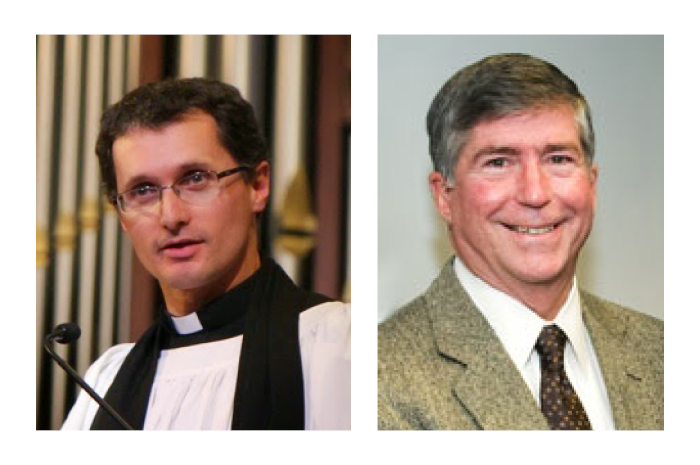
In this season of transition, the standing committee is experiencing a transition of its own at the end of this month, as the Rev. Simon Mainwaring steps down and Mr. Jim Stiven takes over the presidency. Simon and Monica and their three children are leaving San Diego in mid-July as Simon takes up a position as rector of All Saints’, Atlanta. When the bishop communicated his intention to resign, Simon was already a couple of months into his process with All Saints’. Noting the possibility of Simon’s departure and the otherwise regular change-over of president annually, plans were made for continuity during the bishop transition with Jim Stiven elected as president-designate. Jim, a retired judge, has been working in partnership with Simon on all of the leadership functions of the standing committee since our transition work began, and so we expect this change of leadership to be smooth and organic. The effective date for the transition from Simon to Jim will be July 1, and from that date Jim Stiven can be  reached at: scpresident@edsd.org. The entire diocese has been richly blessed by Simon’s leadership on the standing committee, and we are deeply thankful to him. We wish Godspeed to him and Monica in the Diocese of Atlanta.

We also thank the entire diocesan community for your prayers and support.  Please join us in expressing thanks to the diocesan staff, all of whom are keeping things running smoothly and continue your supportive prayers.


Called to Ministry Together

When I met Andrew, he told me he wanted to pursue a calling to the priesthood. I had only been an Episcopalian for three years when we met so I was not sure what that would mean By the time we were married I was certain that Andrew and I were called to ministry together. When I met Andrew, he told me he wanted to pursue a calling to the priesthood. I had only been an Episcopalian for three years when we met so I was not sure what that would mean By the time we were married I was certain that Andrew and I were called to ministry together.  I talked to clergy wives to get their perspectives on life married to a priest.

One of the most important pieces of advice was about starting a family. They all felt it was better to have the family priorities in place before going to seminary. We ended up waiting to begin seminary through the birth of our first two children. Our third child came along during the second summer of Andrew’s education (it’s typically a three-year process). My life has been one long succession of serving ministries. I was working as a vocational nurse in Albuquerque when I met Andrew.

That vocation went into hiatus during the pregnancy of our first child. That eventually was a permanent change as I became a stay-at-home mom, the second of my satisfying servant ministries. Upon Andrew’s graduation from seminary, and ordination, I took up my third servant ministry as a clergy spouse.   I was deeply moved and grateful for this new calling. Being the wife of a priest has been a rich and rewarding vocation for me. Andrew and I could see that we each had our own special and complimentary gifts which allowed us to reach out more widely than we could alone.

After Andrew served as a curate in San Diego, we were called to St Paul’s in the Desert in Palm Springs where he became the rector. This was a hard move for our family because there were no children in our neighborhood. Also, I was suffering from depression from being a stay-at-home mom for so long with no challenges of my own. Many years later, when I reflected on that time, I realized that faithfully answering the call to Palm Springs put in motion what would become my fourth servant ministry. I went back to college and after six years had a bachelor’s degree in art and a multi-subject teaching credential. My two jobs over the span of 16 years were at two schools with the greatest absences, lowest reading scores, and lowest socio-economic rates in the area.

One Sunday morning, six years ago, Andrew asked me to come to church to help him. All the altar servers were missing and he was going to train me to be an acolyte/chalice bearer. He had ten minutes and would appreciate me getting there immediately. That morning when I held the gospel book aloft in the procession, I felt as if I had been electrocuted! That is what it feels like to be called by the Holy Spirit. I was being called to be a Christ Bearer in an ordained capacity. Two years ago I retired from teaching to pursue my education at the School for Ministry in Ocean Beach as I continued to discern my call to the diaconate.

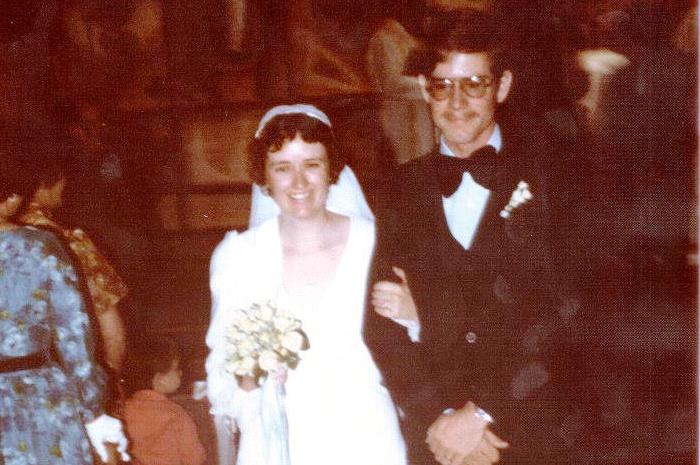
My academic education is now complete. I have had the privilege of serving at all the churches in the Coachella Valley during my formation process. With my ordination to the diaconate on June 17, I will begin a new phase of ministry with Andrew. The next day we will celebrate 40 years of marriage. What a life God has called us to. I encourage you to listen with the ear of your heart to see if God is calling you to a servant ministry as well. It’s never too late. +

Learn more about Susan’s theological training program: sfmedsd.org


Vaya Con Dios

This month the focus of our diocese is upon saying “Vaya Con Dios” to Bishop and Terri Mathes. Your standing committee is busy multi-tasking, however, to assure a smooth transition. Standing committee teams are working on: 1) coordinating farewell events, 2) preparing to select a consultant who will guide us through the process and an assisting bishop who will share leadership with the standing committee during the transition, 3) assembling a team of chaplains, and 4) assuring good communications.This month the focus of our diocese is upon saying “Vaya Con Dios” to Bishop and Terri Mathes. Your standing committee is busy multi-tasking, however, to assure a smooth transition. Standing committee teams are working on: 1) coordinating farewell events, 2) preparing to select a consultant who will guide us through the process and an assisting bishop who will share leadership with the standing committee during the transition, 3) assembling a team of chaplains, and 4) assuring good communications. Monthly updates are planned.  By one month from now, there should be significant news to report, including a draft timetable for the process and information about how the search and nominations committee will be selected. While we need to bring our consultant on board before moving forward very far, we can assure you now of two key rules of life that will guide all our work: we will listen for the voice of the Spirit in your voices, assuring clear channels for communication both ways in all we do; and we will ground our work in prayer. In support of both, please continue to pray regularly for our community in Christ to be strengthened through the selection of our next bishop.


We Have Been Here Before

I was on the standing committee in September of 2003 when Bishop Hughes announced his intention to retire at the end of 2004. I became the president of the standing committee the following February. Bishop Hughes introduced the committee to Bishop Clay Matthews, the executive director of pastoral development for the Episcopal Church. Bishop Matthews met with us and went over all of the steps necessary to call the new bishop. And we were off on our own.

The standing committee invited all members of the diocese to apply for a role on the nominating committee or the transition committee. From the parishioners who asked to be considered, the standing committee selected clergy members and lay members in equal numbers. The goal was to have only one member from a parish. However, we did have a clergy member and a lay member from the same parish in two cases, nominated by their rectors who were members of the standing committee. We had two Hispanic members and one African-American member to have an inclusive representation. The standing committee appointed the Rev. Tom Philips to be the president; the committee did an excellent job.

The nominating committee sent the diocesan profile out to the whole Episcopal Church and requested nominations of people to be our next bishop. We received 37 nominations. The committee made telephone interviews with all nominees, who were from conservative and liberal church backgrounds. Suzanne Foucault, as a diocesan consultant, did an excellent job of helping the committee develop an approach that rated all of the nominees. The committee then visited the ten semi-finalists. It selected five excellent finalists and made their names public. Subsequently three other priests, two of them local, petitioned to have their names also considered, and they were.
During October the nominees and petitioners met in several parishes for a walkabout visit with parishioners. The nominating convention met on November 13 and after three ballots the Rev. Canon Jim Mathes was declared the new bishop by a narrow vote. Bishop Hughes called Jim from the convention floor to congratulate him.

The Rev. Sean Cox headed up the transition committee, who did an excellent job of arranging all the details for welcoming the new bishop into San Diego. The process went well, thanks to the advice of our consultants. It was nice to be a part of it and see such a great outcome.

The whole bishop selection cycle has many parts that need to come together in a timely manner. At the beginning of the search a realistic timetable must be established and it must be followed by everyone.

With Bishop Hughes remaining in place throughout the selection process, we didn’t have a vacancy in the office, as will happen this time with Bishop Mathes resigning on July 1. This will be the major change in the transition process this time. However, I don’t expect that this will present significant problems. Bishop Mathes has developed a strong team and our diocese is in good shape. A part-time assisting bishop will perform those roles that only a bishop can do such as confirmations. The Rev. Canon Nancy Holland, other members of the bishop’s staff, the standing committee and the diocesan executive council will continue to ensure that the diocese continues to function successfully.

This coming period of change is an excellent opportunity for all of us to take a fresh look at our diocese, how it helps our own parishes in our walk with the Lord, and what would we like to see in our new chief pastor. There will be many opportunities to volunteer to be a part of the process and to help guide our search. After the nominating committee has been announced, communicate with the members about any ideas that you have. Attend a walkabout and get to know the nominees. Let your delegate to the bishop selection convention know of your preferred choice. +


Into the Sheepfold

Today’s Christian subculture has developed a sophisticated theology of Self. It’s all about a personal relationship with Jesus, we say. Jesus meets me where I am, we say. What else matters as long as I love Jesus? The common good? Community? Church? Bah! Who needs ‘em? I’m fine on my own, thank you very much. I’ve got my Bible and my cross and my Jesus; and I’ll be fine just packing them all in my car and driving out to the beach this Sunday where I can find a spot to do church all by myself. No, as far as I can see anyway, nothing else matters except that I love Jesus!

We love modern Christianity, because so much of modern Christianity is all about me! But this modern theology of self just doesn’t jibe with biblical witness. Consider the gospel from the fourth Sunday of Easter, John 10:1-10. Here we encounter sheep, shepherds, a sheepfold, a gatekeeper, and a gate. “I am the gate,” Jesus says. The sheep that enter and exit the sheepfold by that one and only gate will find food, water, safety, community—abundant life.

That’s our goal: abundant life through Jesus, together.

The curious thing about abundant life is that it’s offered wherever the sheep are supposed to be. That is, when the sheep exit the sheepfold by the light of the morning, abundant life is found at pasture, outside the sheepfold; and when they enter the sheepfold by the darkness of the evening, abundant life is found inside the safety of the sheepfold.

But we sheep are shortsighted. And we are armed with a sophisticated theology of self. So, naturally, we want to pass through the gate and attain abundant life on our own terms.
By day, we go out to pasture and enjoy ourselves. It’s sunny. A soft zephyr plays on our wool. Food and water are abundant. Our friends are nearby yet far enough away so that each of us is comfortable; we’ve all got sufficient personal space, our own little, individual patch of grassy hillside. Right now all is well; life is unquestionably abundant!

At evening, however, when the sun is setting and things all around us grow dark and obscure, we return to the sheepfold where we enter together by that one, narrow, constricting gate. And now, inside the sheepfold with all the other sheep, things aren’t so nice as they were by the clear, peaceful, zephyry light of day. Now it’s crowded, dusty, and smelly. Now we sheep are in each other’s faces. Now there’s no personal space whatsoever. Now nothing about life feels abundant—except for the abundance of surrounding unpleasantness! Now, in other words, we’ve got something to complain about.

So we look around and begin to articulate the things we don’t like, our sources of discomfort. We grumble about the dust and smells and, worse, the people we feel are responsible for causing our personal discomforts: the other sheep, the shepherds, the gatekeeper, even the gate himself.

And thus we lose our focus. Oh, the gate’s still there, somewhere in the back of the mind. But it’s not the focal point. Instead, now it’s all the dust and smells and lamb chops in our face. And we don’t like this! So, forgetting that here too, inside the sheepfold, abundant life may be found, we determine to pass through the gate solo, on our own terms.

Now, it’s not obvious from the English: in our tongue the word “sheep” can be either singular or plural. In the Greek, however, it is obvious: everywhere in this passage “sheep” is plural! Always and everywhere the sheep enter and exit through the gate together.

Do you know what happens when we try to enter or exit solo? The gate is shut and locked!

We have not been called to focus on our own, individual patch of grassy hillside. We have not been called to focus on the petty disagreements we have with each other and the management. We have not been called to pass through the gate on our own terms. Rather, we have been called to corporate life together, with one focus: Christ and his mission to bring abundant life to the world.

In contrast to the present-day theology of self we hear all around us, the Christian religion is, and always has been, about the one body of Christ and never about me as an individual. Closer to home, the Episcopal Church is, and always has been, about the common good above my own, personal comfort.

And thank God it’s so! Because, do you know what happens when we forget this—when we make it all about my personal relationship with Jesus; when we ask questions like, what else matters as long as I love Jesus? Everything gets inverted. Instead of being transformed into the perfect image of Christ, we transform Christ into my own, far-less-than-perfect image. Instead of asking, “How can I serve Christ?” we expect him to serve me.

But it’s not about me. It’s about the gate—and paying attention to it; to when it opens and when it shuts, and passing through when I’m supposed to: along with everyone else. It’s about abundant life, being transformed—me together with you and the world—into the perfect body of Christ.

During this time of diocesan transition, let’s not be shortsighted. The gate is open. We are passing through, together, with Bishop Mathes. It may feel like we’re entering a time of discomfort and obscurity. But—whether going out into the clarity of daylight or coming into the obscurity of darkness—whenever we pass through the gate together we are accomplishing Christ’s mission. Remain focused on the gate, Jesus Christ, through whom we may know abundant life together! +
Doing Things Differently

In a small church far away, my friend Lynn became a Canon 9 priest. Up on the Canadian border, the church she loved and raised her son in became unable to afford a winstrol half life why do leg weaken and shrink as seminary trained priest. An alternative way of governance for churches was already in place throughout Province 6 called Total Ministry.

Lynn was selected by her church for their Total Ministry team. The diocesan missioner for northern Minnesota supported and trained those folks called to sacramental, pastoral, formational, hospitality, outreach and administrative leadership. (Today we have a School for Ministry for this). Lynn, with her background managing corporate IT in Europe, studied and trained with others for 18 months and was ultimately ordained to serve Holy Trinity, International Falls, Minnesota. The Total Ministry team members each strive to keep their hours to ten a week. The church is holding its own, providing worship and service to the glory of God. For decades Total Ministry has lifted up leaders from within congregations that can’t afford a seminary trained priest. Total Ministry acts on the belief that all the members of a congregation use their gifts for ministry.

In this era of dramatically changing church sizes, congregations do well to explore different models of structure and governance in order to give the Holy Spirit ample room to flourish. Here are some models of church leadership collaborations that parishes are exploring across the country.

Area or Deanery Ministry (San Diego has six mission areas. Find out about yours: edsd.org/maps.) Area Ministry seeks to unite neighboring congregations in collaboration. It is all volunteer and works best if there is a fertile mixture of proximity, friendship, need and generosity. Congregations meeting in their areas sometimes share youth or music programs, an administrator, or bookkeeper alongside the obvious coming together for joint outreach projects and social events. There is usually no cost involved in these joint efforts and may result in savings, especially in personnel.

The literature on merging churches tells us mergers are successful only under rare and specific conditions: a struggling church might approach a stronger church for a merger. Or a growing church may seek space to expand its mission in an underused sanctuary. It often involves a name change and a strong sense of mission wider than the local parish and neighborhood.

Yoked churches are created when two or more churches maintain separate identities but share one seminary-trained ordained leader. They are usually not more that 20 miles from each other and driven by financial pressures. Lutheran/Episcopal yoked churches are working in pockets of the country as well.

We Episcopalians are fiercely individual, wedded to our buildings, and very used to both our own priest and our predictable liturgy. What will it take to begin seeking collaborations beyond our own neighborhood?

Is your congregation right for exploring regional or area ministry? What would it be like to share a priest with another congregation? Have you ever considered talking with the leadership of churches larger or smaller than yours to see if there are ways collaboration might lead to wedding bells?

If you have not done so recently, you may consider some very helpful discernment tools for charting a next step in new or creative next steps.

The Church Assessment Tool (CAT) shows you the places you are most vitalized and where the congregation longs to make changes. Email nholland@edsd.org for information.

Spiritual Gifts Inventories, These help individuals within the congregation name those charisms God has given them in the priesthood of all believers. Contact kmondaca@edsd.org if interested.

The diocesan School for Ministry, is designed to help people to make a difference with the gospel in their churches and the world. Learn more online: sfmedsd.org or contact athomas@edsd.org


Trusting the Process

Last fall, I ran my first marathon. 5 months prior to that, I was having a tough day and thought, “Well, I guess I should sign up for a marathon.”

I can’t explain why I thought that was the next step. I have been practicing trusting my instincts and staying curious in my life, which may have something to do with it. Staying committed to these concepts has transformed my life in tremendous ways, usually in retrospect.

And so I spent the hottest months of the year running longer and farther than I ever had. I was committed to foam rolling my legs everyday and doing strength workouts a few times a week. I was reading books about running, meditating about my race, fueling my body well, and journaling about my strategy.

It wasn’t easy and it wasn’t always fun. I questioned why I was doing it, and chatted with my sister-in-law and coach about how to stay motivated. She kept reminding me to trust the process. I was hearing her words, but I didn’t know what she meant. I was in the middle of it and couldn’t see the big picture yet.

On race day, I was nervous and cold as I waited for the start. I was absolutely ready to start running. And then I was! I started tearing up as I realized that I was doing it….I was running a marathon! I checked my watch after the first mile and got nervous because I thought I was running too fast. Then, after the second mile, I was scared I was running too slow. After the third mile and another judgment about my pace, I decided I wouldn’t look at my watch anymore if it meant I was just going to stress about my effort for the next 23.2 miles. Could I let go of the story line I was creating? What if I stayed curious about another way to run this race?

I decided to try. Instead, I would run each mile, each STEP with integrity, paying attention to this particular moment only. I would run up a hill knowing I was doing my best on this hill, letting go of any expectation. I would run down a hill allowing myself to trust the strength of my legs in that moment. If I could look back at my race and know that I ran each step with integrity, the end result wouldn’t matter. The process of how I ran the race was more important.

That lesson felt epic and extremely powerful for months afterwards.

Soon enough, the stressors of life began to pile up. Between getting engaged, planning a wedding, working full time, and continuing my commitment to physical and mental health, I was overwhelmed. One day this Spring, it occurred to me that I could and should start applying the lessons I learned from my marathon to the rest of my life.

It felt daunting when I realized this was a practice I should do every minute of every day, not just something I tried for 4 ½ hours some day last October. What a tremendous amount of effort it takes, and how exhausting it can be to stay awake and pay attention to each step of your life.

I continue to practice finding my integrity. Sometimes I forget, it feels elusive, or I am confused about what integrity means to me in a particular situation. I try to pair it with being gentle with myself and knowing that everything comes together and then it falls apart again. The concept that my life is in a constant state of transition is a lesson I continue to learn. I also try to remember that I am not always able to see the big picture or fully understand the importance of this moment until much later.

Each day is rich with opportunity to show up with integrity, which creates fertile ground for a life that continues to transform in an astounding way. I feel free to walk (or run) my path – which is full of ups and downs, hairpin turns and potholes – but it is mine. And I have done it the best way I know how.