Honoring Beloved Community: Black History Month

Growing up as a little girl in the 1980s-90s in Paradise Hills, an area of Southeast San Diego rich in diversity, I had the pleasure of attending William Penn Elementary from kindergarten through 3rd grade. At William Penn, even with African-American history being part of the year-round curriculum, Black History Month was a special part of our year and always capped off by the school’s annual Multicultural Fair. School assemblies were guaranteed to relay captivating and courageous stories of Black men and women. The re-enactment of the Greensboro sit-in by Ms. Williams’ 4th-grade class sticks in my mind. The scene closed with my Black, brown, and white schoolmates gathering on stage to sing a rendition of “We Shall Not Be Moved.”

It wasn’t until my family had moved to an up-and-coming neighborhood in East Chula Vista and I transferred to a new school in a new school district that I realized hearing African-American spirituals at school events was not a common part of all elementary school formation. In my new elementary school, the scope of our history lessons was much narrower, and I found myself wanting. It felt like I was being given only the most central portion of a great panoramic picture, and I couldn’t help but wonder how much of the scenery I was missing out on.

I know there are critics within the church who argue that Black History Month (as well as AAPI Heritage Month, Latino-Hispanic Heritage Month, etc.) serves as a tool of division, and there are others who would dismiss the mention of Black History Month within certain contexts as a marketing ploy, or as a way of pandering to “woke” culture. I choose to continue to celebrate Black History Month as a way of widening my lens so that I can view this world that we Christians are called to serve. It is a chance to explore a more abundant understanding of God: God as Creator, and the divine and diverse ways Creator has formed each of us in our different bodies; God as Redeemer, in the abundant chances we’ve been given for conciliation across a history of oppression and ignorance; and God as Sustainer, hold fast those individuals and communities who faced violence, rejection, and erasure in the faith that their sacrifices and labor would bring our world closer to Beloved Community.

In that spirit, and honoring this year’s Black History Month theme of Black Resistance, here are three Black theologians and thought leaders whose work resists particular aspects of the dominant culture and seeks to move us all closer to collective liberation:

Ella Baker (1903-1986)
Those who know of Ella Baker’s legacy often refer to her as one of the unsung heroes of The Civil Rights Era. She served with the NAACP, and later helped to organize the Southern Christian Leadership Conference. In 1960, Baker organized and later mentored the Student Nonviolent Coordinating Committee. Some argue that one of the reasons why she may be lesser known than Dr. King and some of her other contemporaries is due to her commitment to a way of leadership that sought not the spotlight but more to support others to step into a spotlight of their own. Baker is often quoted as saying, “strong people don’t need strong leadership.” Her wisdom regarding the effectiveness of group-centered leadership, and her belief in each individual’s personal and God-given power, often serve as anchoring wisdom for newer theological praxes such as Total Ministry, Shared Ministry, Mutual Ministry, or the Ministry of the Baptized: ways of doing ministry that seek to move away from a community centered around a minister, and more towards a ministering community.

In our diocese, particularly as we continue our collective journey in our Year of Service and explore how we might co-power our neighbors in our surrounding communities, what might we learn from Ella Baker, particularly in her wisdom regarding group-centered leadership? (If you’re not familiar with the term “co-powerment,” click here to hear Bishop Susan explain the concept during the January 30 episode of Faith To Go podcast).

For further reading: Ella Baker and the Black Freedom Movement: A Radical Democratic Vision, by Barbara Ransby

Tricia Hersey
Tricia Hersey, who earned her Masters of Divinity degree from Candler School of Theology, is the founder of The Nap Ministry: an organization founded in 2016 that resists modern-day “grind culture” (“grind culture” = a by-product of extreme capitalism that idealizes working around the clock to prove one’s belovedness, sometimes using one’s proximity to burnout as a status symbol). The Nap Ministry instead seeks to restore the idea of rest as sacred, and to subvert the dehumanizing, sometimes numbing, tendencies that overwork can bring: “The systems make us hard. Rest keeps us tender,” reads a recent post on The Nap Ministry’s social media. “There is power in our collective rest and care.” A major part of The Nap Ministry’s resistance While the practice of the Sabbath has been around since the 7th day of Creation, Hersey and the work of The Nap Ministry provide a more modern and accessible lens that help todays working-aged folks that our belovedness is inherent.

For further reading: Rest is Resistance: A Manifesto, by Tricia Hersey. You can also follow The Nap Ministry on Facebook and Instagram (@thenapministry)

Cole Arthur Riley
Cole Arthur Riley is the creator of Black Liturgies: an online project started in 2020 that seeks “to integrate the truths of dignity, lament, rage, justice, and rest into written prayers.” Riley, who worked at an Episcopal Church as a liturgist, writes most of her offerings to follow our Liturgical Calendar. Many of Riley’s reflections and prayers resist Western spirituality’s tendency to favor a disembodied, intellectual wisdom over the sacredness and knowledge found in one’s own body. As Riley once said in an interview with the Boston Globe, “I refuse to live a disembodied life. [My body] contains more beauty, more mystery than I am able to articulate. And in befriending and honoring it, I communicate belief in my inherent dignity.”

For further reading: This Here Flesh: Spirituality, Liberation, and the Stories That Make Us, by Cole Arthur Riley. You can also follow Cole Arthur Riley and Black Liturgies on Facebook and Instagram (@blackliturgies)

California Bishops Support Affordable Housing on Faith Lands Act

Dear California State Senate, 

We are six Episcopal Bishops, whose dioceses cover the state of California. Our dioceses include 370 congregations serving 98,345 members. We write in support of Senate Bill (SB) 4, the Affordable Housing on Faith Lands Act. This measure would make building affordable housing easier, faster, and cheaper on land owned by faith-based institutions and nonprofit colleges. 

Across California, faith-based organizations and non-profit colleges are seeking to partner with affordable housing developers to build critically needed affordable homes on their own land. These faith-based organizations are long-standing community anchors and are driven by their values to support those most in need and help address our homelessness crisis. 

Per a study by the UC Berkeley Terner Center, there are approximately 38,800 acres of land—roughly the size of the city of Stockton—used for religious purposes and are potentially developable. A significant share of that acreage (45 percent) is located in the state’s “high” or “highest” resource opportunity areas, signaling an opportunity for building housing in neighborhoods with lower poverty rates and greater economic, educational, and environmental amenities. 

Unfortunately, the land that these organizations hold can often be locked into complicated and cost-prohibitive local zoning rules and regulations. These can range from standards which allow only a few units to be built on large parcels to others which limit any housing construction at all. The variety of red tape and obstacles in the way make development financially infeasible and discourage institutions from moving forward with projects that would benefit their low-income and unhoused neighbors. 

A 2022 report from the California Department of Housing and Community Development found that we need to build 1.2 million affordable homes over the next decade to meet our housing goals. Over the last few years, California has added an average of 19,000 affordable units a year. At this pace we will not reach our state goals without increased streamlining for affordable housing production. 

SB 4 will streamline the building process and offer new tools for neighborhood leaders to build safe, stable, affordable homes for local residents and families. This bill will allow places of worship to build 100% affordable housing projects, creating a valuable option in the midst of the state’s housing and homelessness crises. It also provides significant untapped benefits for faith-based organizations, from supporting an organization’s charitable mission to providing revenue that can stabilize the organization’s finances. 

Equally important, this Act will help our state’s construction workforce rise and thrive. Construction workers will be protected by the requirement to pay prevailing wages. On projects with at least 50 units, contractors must offer apprentices employment and pay for health care for construction workers and their dependents. This creates an economic base and new opportunities for construction workers and provides our state with the highly skilled workforce it needs to build our future. 

This is a common-sense opportunity for us to partner with trusted community leaders. The catastrophic tragedies we see on the street every day call for urgent and bold action and this bill will help us move forward. Thank you for your leadership on these critical housing and homelessness issues and for all these reasons, we support this bill. 

Sincerely, 

The Rt. Rev. Marc Andrus 

Episcopal Bishop of California

The Rt. Rev. Lucinda Ashby 

Episcopal Bishop of El Camino Real 

The Rt. Rev. David Rice 

Episcopal Bishop of San Joaquin 

The Rt. Rev. Dr. Susan Brown Snook 

Episcopal Bishop of San Diego 

The Rt. Rev. John Harvey Taylor 

Episcopal Bishop of Los Angeles 

The Rt. Rev. Megan Traquair 

Episcopal Bishop of Northern California 


Being Beloved: 2023 Epiphany Retreat

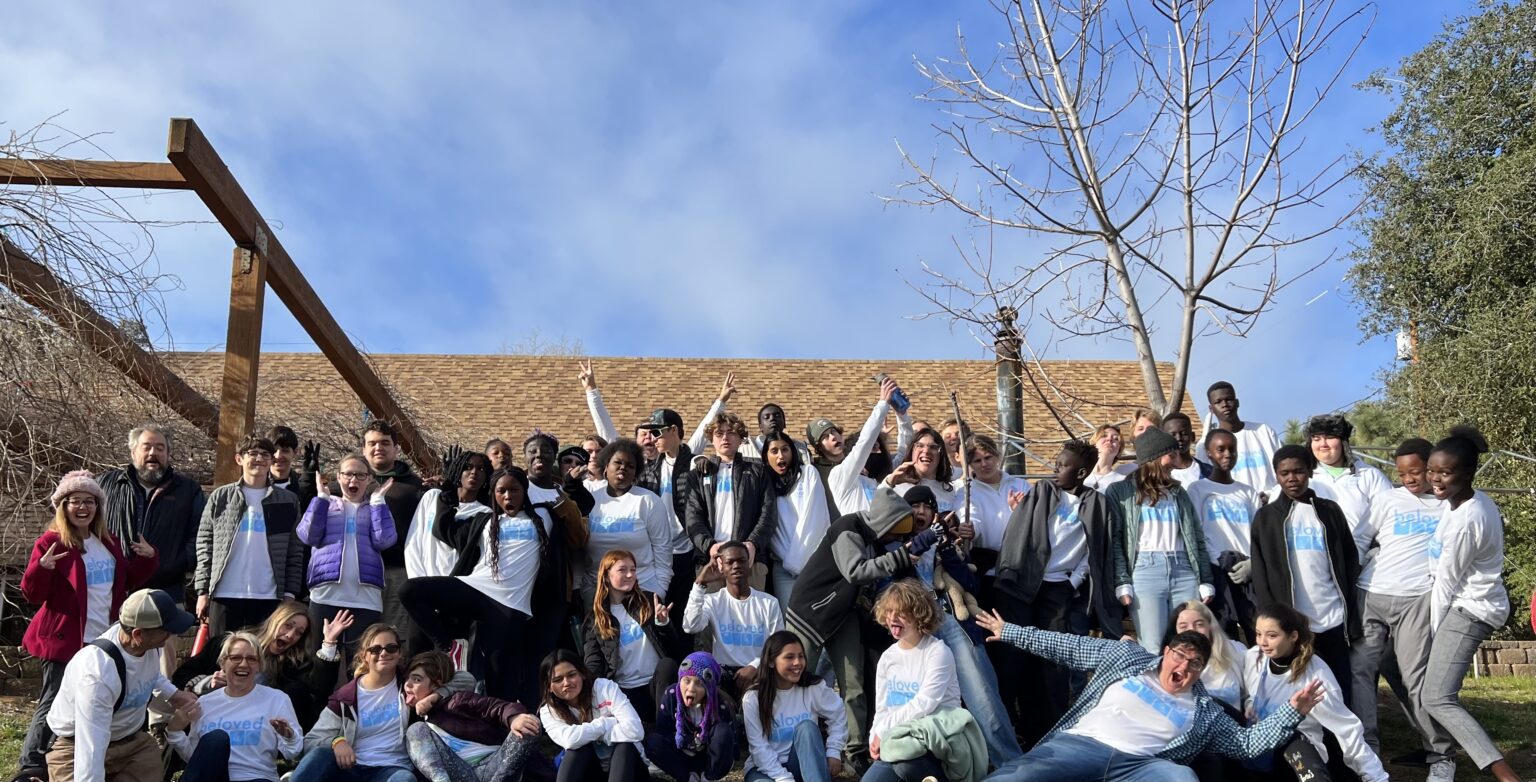
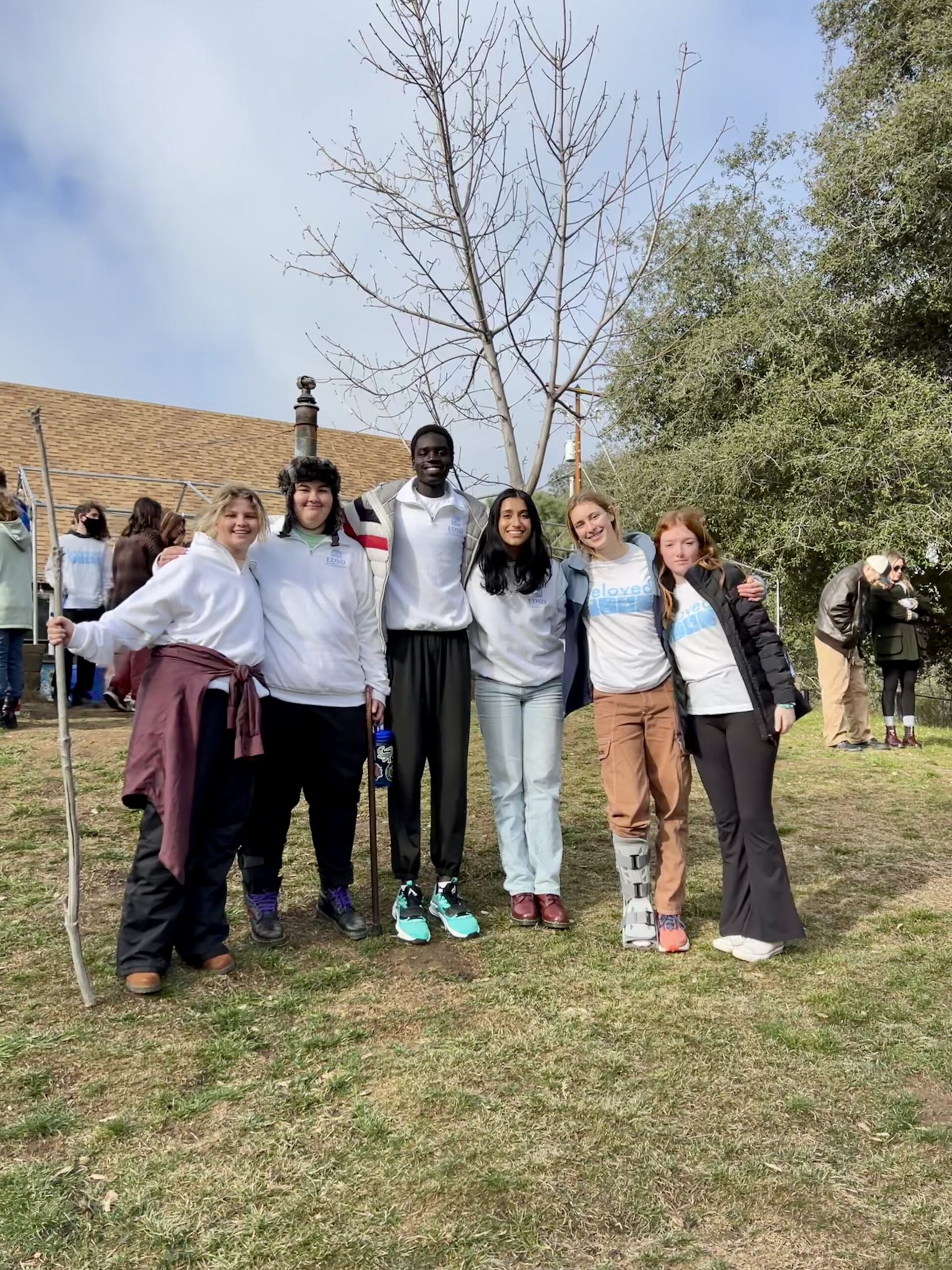
Hello EDSD! I recently joined 50 youth, eight of who attend my parish–St. Bartholowmew’s in Poway–for the 2023 Diocesan Youth Epiphany Retreat at Camp Stevens. I am the Director of Communications and the Assistant Director of Youth Ministries at St. Bart’s, so when eight of our students (four middle-schoolers and four high-schoolers) wanted to go to the Epiphany Retreat, I couldn’t have been more excited. I experienced this retreat last year, and I knew that this opportunity would enliven the students and give me a chance to chaperone and encourage my youth to attend again this year. It was one of the most fulfilling spiritual weekends I’ve had in a long time.


Growing up, I learned about youth groups and became jealous of my protestant and non-denominational friends whose churches had discussion groups and social events for their youth. My Catholic church and the other one in our town had schools attached to them; therefore, they didn’t even think to provide anything besides CCD (religious ed) classes for us public school kids. In eighth grade, my mom and I got together with some other peers and parents to approach the head pastor and start a youth group of our own. We’d meet once a week in a room over one of our members’ garages, listen to contemporary Christian music, discuss a topic of the evening, plan an annual ski trip, attend a diocesan event a year, and eventually, World Youth Day. At least I had something. It wasn’t enough. It came nowhere close to what our EDSD churches, our diocese, and Camp Stevens offers our youth today.


When we arrived, the 50+ attendees checked in and found friends old and new in the dining hall. The camp and diocesan staff welcomed us. We served one another meals and prayed as Jesus did with his disciples. We had delicious food cooked by the camp staff, decided on rules for the weekend, turned in cell phones, and gathered into small groups.


Throughout the weekend, we discussed salt and light, elements from the Epiphany gospel readings. We enjoyed fellowship with one another and welcomed new friends to join in the conversations and fun. We sang around a campfire, made s’mores for a treat, prayed for our world, made bracelets with words of intention, painted rocks for inspiration, climbed a ropes course for challenge and exhilaration, cleared trails around the property for service, and participated in communion for our spiritual fulfillment–making memories that will last a lifetime.


These weekends are just as much fun and fulfilling for me as a grownup, facilitating and witnessing our youth’s camp activities as it is for the students. I also had a chance to do things I never did growing up and be myself in every way, something that was not a safe thing for me during my childhood or as a young adult. At St. Barts, our diocesan events, and Camp Stevens, I am allowed to physically present myself as I feel comfortable. I am a female with a short haircut and often wear masculine clothing. My relationship with my wife is affirmed, and it is safe to share this aspect of my life with anyone if I wish to do so. But even more importantly than spaces being safe for me, I am identified as a safe adult who represents a community of LGBTQ+ believers in Christ, with whom many of today’s youth identify and need. I am grateful to be seen as worthy of filling that role and honored to be an example to all of our youth that anyone can be a believer; and that everyone is worthy of God’s love, including them, wherever they may be in their physical expression, gender, sexuality, and spiritual journeys.


The Rev. Hannah Wilder joined us to celebrate the Holy Eucharist and incorporated our Youth Leadership Council. One of the students was invited to serve at the altar, which connected our students even more with the liturgy. It was a beautiful moment that I will cherish. I was so proud of this student. And I am incredibly grateful for the gifts that Rev. Hannah brings to this camp, our church, and our diocese while simultaneously being a vibrant member of the LGBTQ+ community. How cool is that? Our youth can see LGBTQ+ leaders and clergy of various ages, races, genders, orientations, and more! That is mind-blowing to me.


Finally, on Sunday morning, a group of teens was lingering at their dining table after breakfast. I let them know they needed to finish up. “We don’t want to finish breakfast and cleanup…that means that camp is over, and we don’t want to leave,” they said. Guess who the majority of these campers were? – our non-binary and LGBTQ+ youth. And I didn’t blame them. I would have felt the same way had I found a group of peers in such an open, safe, affirming, and supportive Christian environment. They get to be who they are AND love Jesus. AND BE LOVED by Jesus. And what a perfect theme for our year for our diocesan youth: Beloved. Thank you, Camp Stevens, the Episcopal Diocese of San Diego, Charlette Preslar, my fellow youth ministers, the Youth Leadership Council, St. Bartholomew’s Episcopal Church, and my wife for making it possible for me and all present to have the weekend that we just had. If you are reading this, know that you are “Beloved” by our Lord, God and Savior. God Bless.


Why I Serve: Light Through a Diocesan Window

There is a nice breeze that gently blows through the downstairs window at the Diocesan Offices, but there is also a pillar made of jagged and pock-marked cinder blocks, symbols that I find best describe my work. I am the downstairs receptionist for the Episcopal Diocese of San Diego’s Offices and the front line for anyone interacting with our office. 

My primary responsibility is to help field calls and help people reach the person they need, but a large portion of my work is with the people we serve on the street. I expected the business calls; what I did not expect were the calls from people in “particular” hotel rooms, or from the streets, or in RVs somewhere, asking if the diocese can spare three hundred dollars. “Just this one time! You’re a church, right? I’ll pay you back next week when I get paid…” I know these calls are scams, but they are impossible to ignore. Like the pock-marked pillar outside my window, they shattered my once-held idealist views about working at the diocese. (As if the Diocesan Offices were an ivory tower). I now know that the Diocesan Offices are as much a part of the Church, serving in the mud and muck that is a piece of all our lives, as any other congregation in the diocese. 

But there are other calls too. Calls that are urgent and often times frantic–people searching for loved ones who had suddenly disappeared who they believed had unraveled through drugs.

One man called looking for his son. He then shared with me his anxiety and deep worry. His son had run away from home and had not been seen or heard from in months. The voice was desperate. I remember imagining the pain this man was feeling. I also felt powerless listening to someone in pain and unable to help. All I could do was listen, to feel with them, to pray for them.  

Then there are many untold stories that break my heart when hearing them directly. 

Leticia is a homeless woman who sometimes comes to the Diocesan Offices to use the phone. When she calls her parents, it sounds like another person. She sounds like a little girl. Leticia is in her mid-fifties! 

Many times, while I sit nearby, I hear this ‘little girl’ begging her mother to come pick her up so she can get a shower and some food. But this little girl, in her fifties, lives a fair distance away from her parents. When she hangs up, a long silence ensues.

From my window, I often see the marks that living outdoors can leave. Working with the homeless at the diocese has opened my eyes to the violence I do not personally know but that I see in the people I serve. I see it in the way women physically distance themselves from the men. I know now that they likely hold a trauma-informed hurt from other men on the street. When I see this, it makes my heart sink.  

But there is hope.

People will surprise you with their buoyancy and resilience. The other day an older woman named Nancy came to the diocese to use the phone, and she was beaming. She had been living on the streets but had recently moved into a home. She was beaming. Through her smile, she told me how grateful she was that the diocese reached out to people in her situation before diving into how different having a home is from living on the streets. It put her in a completely different space inside and out. It was like her body and soul reconciled. She thanked me for using the phone and looked me right in the eye. It was the sincerest expression of gratitude I’ve felt in a long time. Now I was beaming. 

Through my job as a receptionist at the diocese, I see the spark, the light in the unsheltered. I see it in their eyes and their heart. Being a receptionist for the Episcopal Diocese of San Diego’s office allows me to witness the work of Jesus Christ in people. For me, it’s a hopeful and powerful reminder of Christ’s unending love for us all. 

The breeze from my window is nice, but I love the roughness of my pillar too.        


Prepare the Ashes

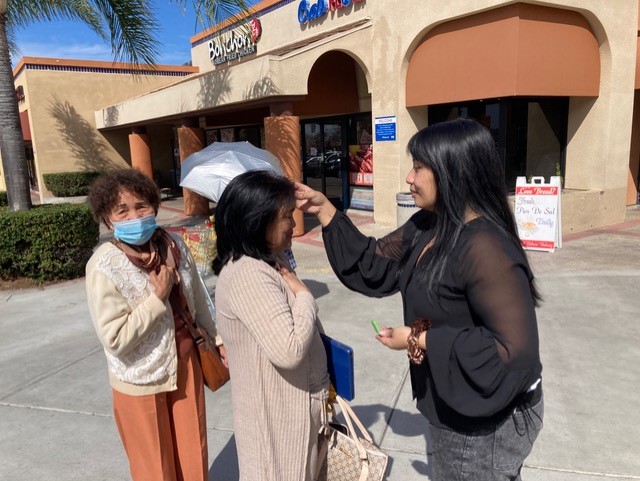
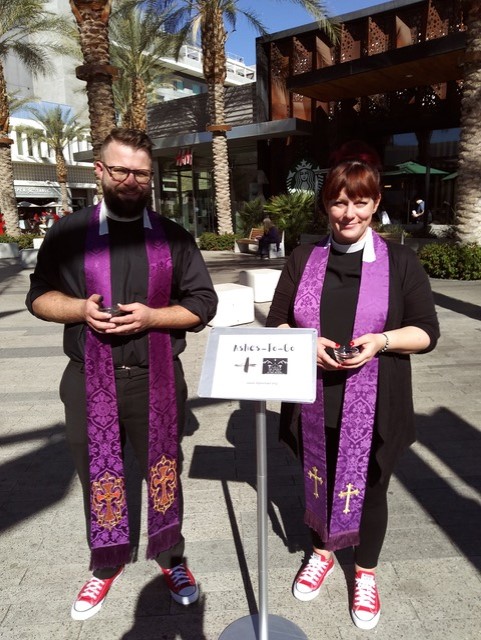
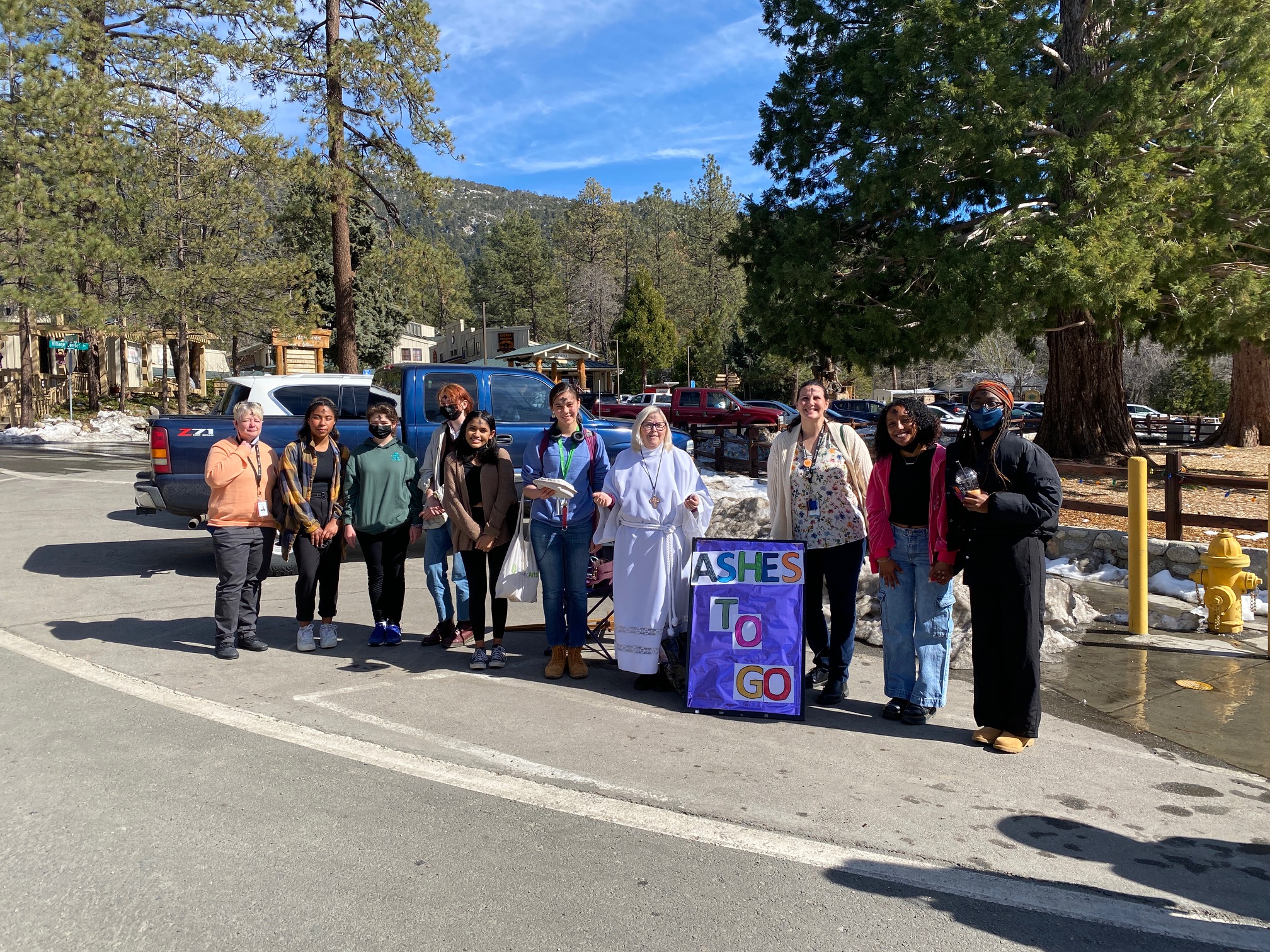
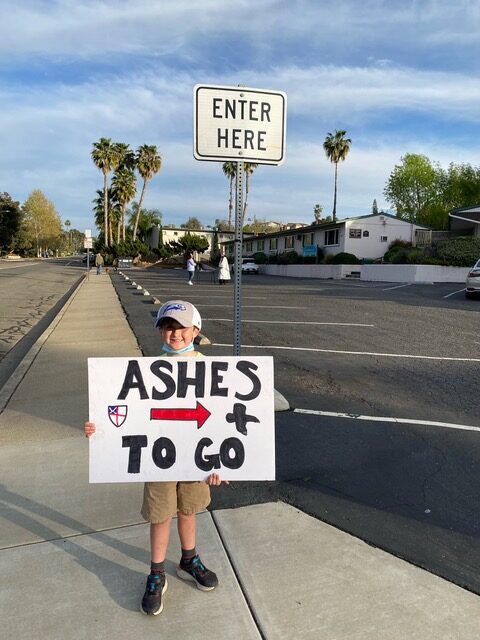
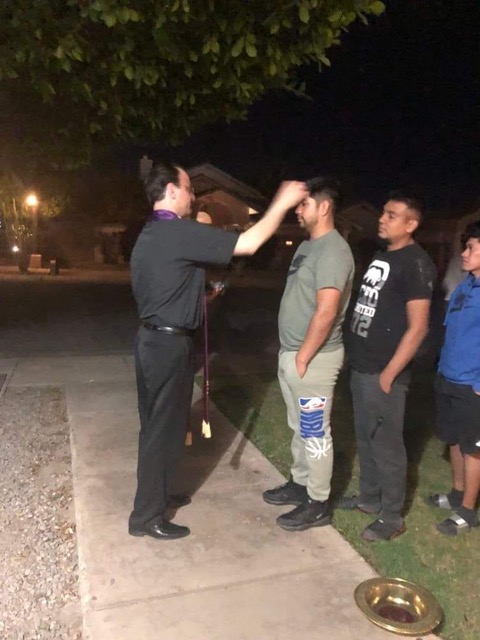
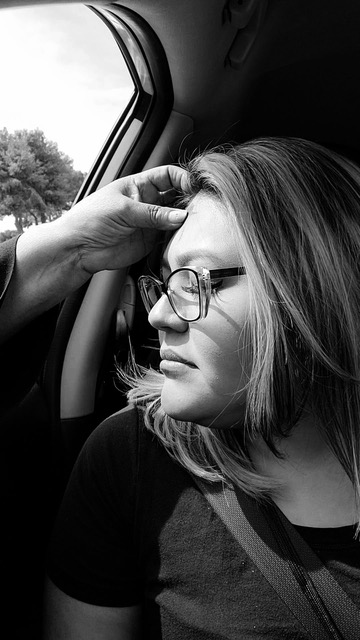
On Ash Wednesday of 2022, Episcopalians across the four counties that make up the Diocese of San Diego left their church buildings, entered their surrounding communities, and offered the imposition of ashes. This act has come to be known as “ashes to go.” The practice has its detractors. The name itself implies a correlation with the kind of drive-thru food we are all familiar with. It may be a cheap shortcut to spiritual sustenance, but I am convinced that the practice has its merits.

Possibly the greatest merit of Ashes to Go is its honesty. Not only in the words that are shared but in its transparency. How often do we see Episcopalians in parking lots vested in surplices or cassocks, administering an ancient ritual as they navigate concrete curbs and bustling passersby?

In EDSD, we know that how we share the Good News of Christ can make all the difference. By making ourselves publically available to those who would not ordinarily attend an Ash Wednesday service, we’re providing people a pathway toward a deeper understanding of themselves and our church.
Will you join us in sharing your Ashes to Go experience this year? You can submit photos, the number of people served, and a short story here.

Last year in Palm Springs, the Rev. Dan Kline shared an experience as he and the Rev. Jessie Thompson walked by a restaurant in town. “One of the waiters asked for ashes as we walked by,” Dan wrote. Not long after this, the restaurant’s hostess came out asked the two priests to come into the restaurant. “The whole kitchen staff asked to receive ashes,” Dan continued, “they were working a double shift and were not able to make it to services.” Amidst the raucous and smells of a busy kitchen, several individuals were reminded that they are not God … but are in the care of the God who made them and loves them.

As we share this tradition, we often find a surrounding community more ready than we realized to receive the beauty of God’s good news and the rituals of our Church. Whatever the response of our neighbors, I cannot overstate how important it is for our members to learn what it feels like to be Christians “out loud.” 

Of the congregations that participated in Ashes to Go in 2022, each served 61 individuals on average. Each of these beloved individuals would not have otherwise had contact with the Episcopal Church on Ash Wednesday. If all the 42 parishes and missions in the diocese participated in this work that would be over 2,500 individuals receiving a glimpse of the Episcopal Church—our people and particular way of being Christian—that may not have. Is that worth it? I think so. 

If Ashes to Go doesn’t work for your congregation, what would? Could you process around your community on Rogation days or Palm Sunday, inviting neighbors to join the procession? Bless pets in a nearby park on St. Francis’s feast day? Maybe you have other ideas. One of the most radical characteristics of Jesus’ ministry was that he touched people–normal folks, in normal situations. It is critical that we do the same. One way we can do this is by capitalizing on opportunities to be outside of our buildings, within our communities, and transparently sharing who we are with our neighbors. 

This year, we’d like to share your experience of Ashes to Go. Please share your story with the Diocese here.


Statement on Gun Violence

Dear Friends in Christ, 

Today, we woke up to news of the third mass shooting in California in 2023. On January 16, a shooting in the Central Valley killed six people, including a teenage mother and her baby, in violence that authorities linked to gangs. On January 21, the Lunar New Year, a shooting at a ballroom dance hall in Monterey Park killed 11 people and injured nine others, impacting a mostly Asian-American clientele. The dance hall was regarded as a community center, and it was therefore a place of safety and joy for the neighborhood, which adds to the sense of grief for that community. And on Monday, a shooter in Half Moon Bay killed seven people at two businesses.  

I grieve. I grieve at the loss of life that cut short the lives of ordinary people living, working, and enjoying a lively hobby. I grieve at the sheer number of people who find violence against others to be the answer to their own misery. I grieve at a society that would produce angry perpetrators and allow them to obtain horrifyingly deadly weapons. I grieve that ordinary people cannot live day-to-day without fearing the kind of violence that erupts with alarming regularity in our country. I grieve that a joyful New Year’s celebration has turned into an occasion of dread of the continuing waves of violence that devastate people and destroy lives.  

I don’t know how to fix this problem.  

All I know is that we followers of Jesus are called to the Way of Love. Love is not a happy emotion, but rather a decision and a sacrifice that asks us to put the welfare of others before our own best interests. Love calls us to recognize, with Jesus in the Beatitudes in this Sunday’s gospel, that God’s blessing rests above all, not on the mighty, but on the meek, the merciful, and the mourners. Love requires us to stand with those who suffer, and work to transform our culture of death into a reverence for life.  

I ask you to pray for those who are victims of violence, for those who might be considering perpetrating violence on others, and for our culture of violence, that God’s love may work to bring life and transformation into all places of hopelessness and hatred.  

And I ask all our congregations, during this Year of Service, to go out into your neighborhoods. Get to know your neighbors. Learn about their hopes, needs, and frustrations. Discover how you can serve and love your communities. Build relationships with the people around you, and help to grow a kinder, more understanding world.   

And pray. Pray for the victims, for the perpetrators, and for our society. Pray for an end to gun violence. Pray for God’s kingdom to shine more brightly through us. Pray that Christ will show us how to show up faithfully in our world and bring peace.  

Educational, Advocacy, and Other Resources on Gun Violence: https://bishopsagainstgunviolence.org/resources/other-resources/ 

Liturgical Resources: https://bishopsagainstgunviolence.org/resources/liturgical-resources/  

O God who remembers, we hold before you all who have died from the plague of gun violence in our land. We remember those who have taken their lives with a gun, those who have died in school shootings and mass shootings, those who have died from gun violence fueled by anger, by abuse, by accident, by domestic violence, or by crime. We lift our voices in sorrow and frustration knowing that every life is infinitely valuable to you. Receive all who have died into the arms of your mercy, bless those who mourn with the hope of eternal life, and strengthen our hearts and our arms to bring an end to this scourge. This we pray in the name of the one who overcame the power of death, your son, Jesus Christ. Amen. 

In Christ’s Name, 

Bishop Susan Brown Snook


A Case for Love

In May of 2021, we began filming. Our crew traveled across the US, on and off, for six months. We traveled to big cities and small farms, to liberal and conservative strongholds, to wealthy and desperately poor locales. We interviewed and filmed hundreds of people from all walks of life: business people, tourists, wealthy beachgoers, those living on the streets, and almost everyone in between. We asked them their thoughts about LOVE, specifically about unconditional, unselfish, sacrificial LOVE. We stepped back and listened. Really listened. To. Every. One. Of. Them. And this is what we heard… 

We heard that we all are pretty much the same. Really, we are. We’re all trying to do right by our families as parents, spouses, children, or loved ones. We’re all trying to figure out what our role on this planet is and want it to mean something. We all want to be loved, genuinely loved, by someone else. If only we could approach one another with that commonality in mind! And then, this is what we saw.

We saw people light up because few (if anyone) had ever asked their opinions about this topic. For those moments, we saw a bit of a transformation in them as they felt heard and valued. Amidst the terrible isolation caused by Covid 19 and the relentless division created by our mostly partisan media outlets and social media giants, people again experienced a taste of humanity through their interaction with a group of filmmakers choosing to explore how LOVE could make things better. 

This film has changed my life. As a child of a Lutheran pastor father and a devout Catholic mother and then marrying an Episcopalian, I’ve been blessed to have seen from an early age that there is so much more that unites us than what divides us. 

That is why we created Grace-Based Films and why we made sure that its work is funded by donors rather than investors. This allows us to tell the stories that people are hungry to see, not just what film studios want to make.  

The film is not 100% complete; it has not been professionally colored, and it has temporary music and sound in it, but the heart of the message is clear. We are so grateful to be able to share this evening with you!  

“A CASE FOR LOVE” is a compelling documentary that takes the viewer on a journey, exploring whether Bishop Michael Curry’s message of unselfish love still exists in our divided world.

Using gripping personal stories and insight from people drawn from all walks of life, both ordinary and notable, “A CASE FOR LOVE” examines acts of unselfish love, both big and small: a kind word, a redemptive community, harsh questioning of preconceived ideas, a commitment to stay when others have fled. Over the course of the film, the viewer comes to realize that the impact of the loving response may be the answer our divided culture is seeking. Change won’t be easy, but we must start somewhere. “A CASE FOR LOVE” hopes to inspire that new beginning.

Do not miss this opportunity to be one of the first to view “A CASE FOR LOVE” in this first-ever public screening on Wednesday, January 25, from 6:00 – 9:00 pm in St. Paul’s Cathedral’s new Guild Room (2728 Sixth Ave, San Diego, CA 92103). Parking is available at the 525 Olive entrance. View the “A CASE FOR LOVE” trailer here


Eight Tips to Enjoy a Book Study

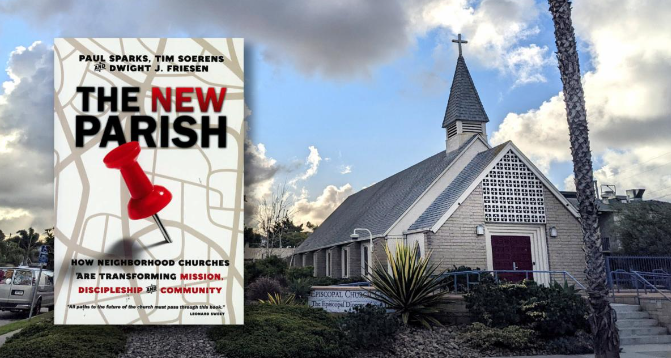
This year, as part of the Year of Service, EDSD is studying one book: The New Parish: How Neighborhood Churches are Transforming Mission, Discipleship, and Community. Churches across the diocese are encouraged to gather in small groups to explore how your church can be known to our neighbors through care, reconciliation, and renewal. After all, a church that cares for its neighborhood is the type of church others want to join.

Bishop Susan Brown Snook said, “This book is an excellent example of how churches can lead local neighborhoods to the gift of God’s love through service and action. I encourage you to join your church’s book group and engage in the life-giving joy of sharing Christ’s love with your neighborhood.”  

Each chapter in The New Parish concludes with questions for conversation and missional practices for congregation members—making facilitating a book study much easier.

In preparation for your congregation’s book study, you will want to begin by selecting a facilitator, a time, and a place to meet. Set up sign-ups for participants and provide information for members to acquire books ahead of time. Promote the book study during worship and invite members to participate. For more small group ideas, you can utilize our Faith to Go resources for small groups.

Here is a suggested book study schedule for reading and discussing each week:

Week 1—Feb. 22 to Mar. 1: Introduction and Chapter 1

Week 2—Mar. 1 to Mar. 8: Chapter 2 and Chapter 3

Week 3—Mar. 8 to Mar. 15: Chapter 4 and Chapter 5

Week 4—Mar. 15 to Mar. 22: Chapter 6 and Chapter 7

Week 5—Mar. 22 to Mar. 29: Chapter 8 and Chapter 9

Ask your clergy about the Diocese-wide Lenten Book Study, and find out when your local group starts meeting. Below are eight tips for enjoying a book study:

  1. Make notes and mark pages as you go
    Reading a book discussion–whether as a leader or participant– is different from reading just for pleasure. Notes help you recall what was significant or call to attention something the author included that you found interesting. Plus, making notes as you go slows down your reading–making it a more intentional time of reflection.
  2. Ask tough questions of yourself and the book
    Don’t be afraid to ask hard questions. Often the author is presenting difficult issues for that very purpose. Look for questions that may lead to in-depth conversations with your group and make the book more meaningful.
  3. Pay attention to the author’s message
    Remember that a good author uses every word in deliberately. Critical reading improves with practice. Try to be aware of what the author is revealing about herself and what she wants you to learn about life from her perspective.
  4. SPEAK UP! Group discussion is like a conversation; everyone takes part in it. Each speaker responds to what the person before them said. Enjoy the spontaneous exchange of ideas and opinions. The discussion is your chance to say what you think about the text. During a book discussion, what you’re really discussing is everything that the author hasn’t said. Look forward to saying, “Gee, I never knew that.” or “Isn’t that interesting.” 
  5. Notice the structure of the book
    Sometimes an author structures a book to illustrate an important concept or to create a mood. Notice how the author structured the book. Are chapters prefaced by quotes? If so, how do they apply to the chapters? How does the sequence of ideas unfold to create a greater understanding? Is it written in flashbacks? 
  6. Share your viewpoint and experience
    Don’t expect to be called on to speak; enter into the discussion with your comments. When disagreeing with other people’s interpretations or opinions, say so and tell why, in a friendly way—considering all points of view are important to group discussions.
  7. Make comparisons to other books and authors
    Compare The New Parish to others books by Paul Sparks, Tim Sorens, or Dwight J Friesen. Or compare it to books by other authors. Often, themes run through authors’ works that are more realized by comparison. Comparing authors’ works may help you solidify your opinions, as well as reveal what you may otherwise miss.
  8. Listen to others
    Try to understand the other person’s point of view. Remember, there are several points of view possible on every question. 


We Believe: EDSD Collaborative Confirmation

Confirmation programs are a profoundly moving and connective experience. When infants and young children are baptized, their parents and godparents promise to nurture them in faith and commit them to the way of Jesus–a life characterized by prayer, service, justice, forgiveness, and love. At confirmation, teenagers are invited to choose this way for themselves. Even youth who do not choose to be confirmed come out of the program profoundly changed.

And yet every journey would be richer with companions on the road. Peers to walk with, laugh with, and share the work, shape the experience and make the challenging days more bearable.

Jesus modeled that for us, too.

It was from this idea that the collaborative confirmation project was born. A hybrid program, with in-person gatherings and online meetings, will provide access to young people across our diocese. Broadening the landscape increases the number of young people in the cohort and means that whether a congregation has a robust youth group or just a few teens that attend each week, they will journey with friends.

At the end of the six-week program, teens will be eligible for confirmation in their home congregation.

We Believe… kicks off on the first Sunday of Lent and concludes in Holy Week; what an extraordinary season to choose to walk more closely with Christ. What an exquisite gift to claim your baptism vows as we journey with Jesus to the cross.

More information and registration can be found through this link.


The Theology of Service

Thus says the Lord of hosts, the God of Israel, to all the exiles whom I have sent into exile from Jerusalem to Babylon: Build houses and live in them; plant gardens and eat what they produce….But seek the welfare of the city where I have sent you into exile, and pray to the Lord on its behalf, for in its welfare you will find your welfare. Jeremiah 29:4-5,7

[Excerpt from the Bishop’s Address 2022] Jeremiah is speaking to the Jewish exiles in Babylon, telling them that God has a mission for them in the place where God has placed them. We Episcopalians are not in exile, but we are placed by God in communities, and God calls us to seek the welfare of the communities where we are planted. That means getting to know our neighbors. I have declared 2023 as our diocesan Year of Service, and throughout the year, our diocese will learn about and practice what it means to seek the welfare of the communities we inhabit.

I believe that every church is placed by God in a particular community for God’s reasons – because God has a mission in that community. So the church should be truly rooted in the community – but not in a static way. Not in a way that lets the church sit with closed doors and minister only to itself.

In their book, The New Parish, Sparks, Soerens, and Friesen call us back to the very Anglican concept of a parish – not as a self-sufficient and self-governing organization, as we tend to think of a “parish” in The Episcopal Church, but rather as a church that is rooted in its community and responsible for its community.

They write that the term “parish”:

“refers to all the relationships (including the land) where the local church lives out its faith together. It is a unique word that recalls a geography large enough to live life together … and small enough to be known as a character within it. Parish … also functions as an action word because it calls us to the telos, or purpose, of the church – living out God’s dream and caring for the place we are called.”

The authors argue that identifying as a parish rather than an organization – that is, a community rooted in a particular place rather than a group of people called together from disparate places – allows the neighborhood church to stand in solidarity with its neighbors, seeking the flourishing of all.

For a parish to truly stand in solidarity with our neighbors, we need to know our neighbors, which means we need to go out into the community. We do this by getting to know our neighbors, their hopes, their dreams, their disappointments, and the things that keep them awake at night. How can we love and serve our neighbors if we don’t know them?

Our diocesan staff has been working with congregations on a community engagement process. Community engagement is a strategic process of involvement in a particular social group or geographic context (i.e., town, neighborhood, city block) with the purpose of understanding and improving the community’s well-being. During this Year of Service, we will have opportunities to learn a theology of service as well as learn about opportunities to serve others right now. I urge all congregations to participate in training and get to know your parish – the neighborhood outside the church’s walls. Because your neighborhood is your parish.

If we can manage to do these things, slowly but surely, we can transform both the church and the communities around us. We will be truly operating as the New Parish. 

Faced with a time of dissipation, or rapid change that means losing some of our old ways of doing things, we will use our creativity to hang onto what is essential to our identity – Jesus Christ, our Lord. At the same time, we will cast off old structures that don’t work for us anymore – our insularity, our sometime habit of staying separate from our neighbors, our attractional model of church, expecting eager church consumers to come to us. And we will adopt new ways – of being involved in our community, integrated with our community, partners with our community. 

We will be the new parish.

I invite you to join me on Wednesday, January 18, at 6:00 pm for a webinar series I will commence on the theology and practice of service. You can click here for more information. After this four-part webinar series, I invite you and your congregation to participate in our diocesan-wide book study of the book The New Parish. In Eastertide, we will build upon this new understanding as engage in diocesan-wide service projects in which we will learn more about our neighbors and seek the welfare of our communities together.